It's Not The Coach's Fault
My latest story for Wired Playbook discusses recent research from a group that analyzed 46 seasons of professional German soccer league data to determine that firing a coach mid-season -- a tactic clubhouses use to jump-start a fledgling team -- has absolutely no effect on the squad's performance.

My latest story for Wired Playbook discusses recent research from a group that analyzed 46 seasons of professional German soccer league data to determine that firing a coach mid-season -- a tactic clubhouses use to jump-start a fledgling team -- has absolutely no effect on the squad's performance.
So, to really compare apples to apples and provide a clearer picture of what effect a new coach has on a losing team, Heuer thought it better to identify suitable control groups — teams that had bad luck, but stuck it out with their current coach for the rest of the season — and compare them to teams that handed their coach a pink slip when times got tough.
As they suspected, there was absolutely no difference between the teams that fired or retained their coach, as all teams that experienced an early period of bad luck showed improvement later in the season. But pride is a formidable enemy, and the data consistently showed that in many cases, a team decided to prematurely give their coach the boot after they took a beating on two consecutive games.
Read the full story here.
Photo via Flickr / BrokenRhino

Heuer, A., Müller, C., Rubner, O., Hagemann, N., & Strauss, B. (2011). Usefulness of Dismissing and Changing the Coach in Professional Soccer PLoS ONE, 6 (3) DOI: 10.1371/journal.pone.0017664
Brian Mossop is currently the Community Editor at Wired, where he works across the brand, both magazine and website, to build and maintain strong social communities. Brian received a BS in Electrical Engineering from Lafayette College, and a PhD in Biomedical Engineering from Duke University in 2006. His postdoctoral work was in neuroscience at UCSF and Genentech.
Brian has written about science for Wired, Scientific American, Slate, Scientific American MIND, and elsewhere. He primarily cover topics on neuroscience, development, behavior change, and health.
Contact Brian at brian.mossop@gmail.com, on Twitter (@bmossop), or visit his personal website.
Big-Brained Athletes
I'm a little late posting this one here, but last month I wrote a story for Wired Playbook on how athletes, much like musicians, seem to have brains that are beefier in certain areas
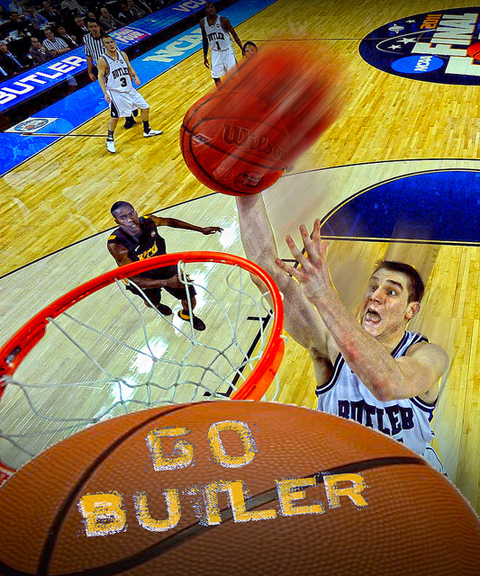
I'm a little late posting this one here, but last month I wrote a story for Wired Playbook on how athletes, much like musicians, seem to have brains that are beefier in certain areas.
Instead of just comparing the brains of athletes to non-athletes -- a correlation that wouldn't necessarily show if sports causes the brain to gain mass or if people with a thicker cortex in these areas are more likely to excel in athletic competition in the first place -- the researchers determined how each year of practice correlated to changes in the brain:
However, in one of the brain areas studied, the researchers found that the number of years each athlete competed as a diver nearly predicted how thick the subject’s brain would be. If the results of this small study hold, there may be some biological truth to the adage, “practice makes perfect.” It’s as if each year of sports experience becomes neatly folded as a new layer of neurons atop previously mastered skills, physical knowledge, and competition know-how that have already been crammed into the brain.
I think it's interesting to think about how these findings could impact sports statistics in the future. I mused:
These findings provide a small glimpse of how biometric and neurological data may one day be used to gauge a player’s ability and performance. Granted, there’s still a lot of work to be done in understanding exactly what’s going on in an athlete’s head.
Read the entire story here.
Photo via Flickr / alandberning
Wei, G., Zhang, Y., Jiang, T., & Luo, J. (2011). Increased Cortical Thickness in Sports Experts: A Comparison of Diving Players with the Controls PLoS ONE, 6 (2) DOI: 10.1371/journal.pone.0017112
Brian Mossop is currently the Community Editor at Wired, where he works across the brand, both magazine and website, to build and maintain strong social communities. Brian received a BS in Electrical Engineering from Lafayette College, and a PhD in Biomedical Engineering from Duke University in 2006. His postdoctoral work was in neuroscience at UCSF and Genentech.
Brian has written about science for Wired, Scientific American, Slate, Scientific American MIND, and elsewhere. He primarily cover topics on neuroscience, development, behavior change, and health.
Contact Brian at brian.mossop@gmail.com, on Twitter (@bmossop), or visit his personal website.
Helmets make sports less safe
That was the gist of a headline I read on The Atlantic this morning.
At first blush, I thought the commentary by Edward Tenner on a recent NYT report was overreaching a bit. How could helmets, which protect the head, make sports more hazardous. But as I read on, I saw the point he was trying to make.
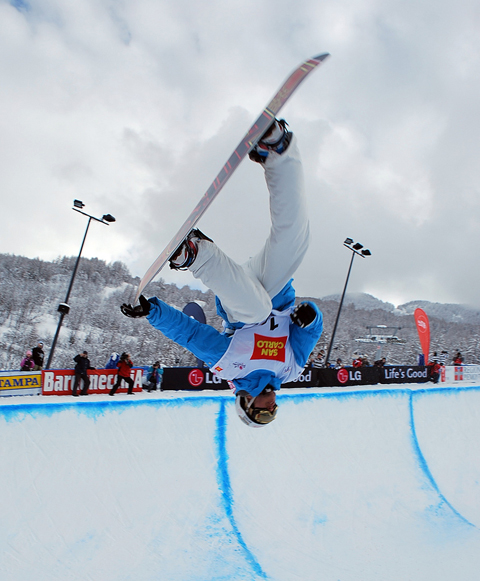
That was the gist of a headline I read on The Atlantic this morning.
At first blush, I thought the commentary by Edward Tenner on a recent NYT report was overreaching a bit. How could helmets, which protect the head, make sports more hazardous. But as I read on, I saw the point he was trying to make.
In certain situations, helmets may give an athlete a false sense of security. With their noggin firmly secured in a near-indestructible plastic casing, the theory goes, some contact sport athletes might deliver hits they'd otherwise shy away from.
The NYT article focuses on women's lacrosse, where helmets are currently only worn by goalkeepers. In fact, the other players are banned from wearing helmets. And many of the sport's competitors would like to keep it that way.
But the crusaders are facing an uphill battle because the idea that players engage in riskier behavior when they wear helmets, well, that's difficult to prove. Most of the evidence presented is anecdotal -- like the fact that hockey and football hits became noticeably more vicious after the professional leagues instituted helmet policies.
Everyone knows I'm a staunch supporter of protective headgear for snowsports and bicycling. But I can see the points being made for continuing bans on head gear in certain sports. Strap a helmet on or lacrosse player and the game dynamic changes a bit. Why worry about finesse and skill when you can just bowl your opponent over?
Perhaps we need to better define which sports draw higher risks for head injury by their very nature, opposed to those where the head protection creates the danger in the first place.
Doctors and sports officials need to seriously consider the increasing evidence that concussions are associated with cognitive decline in later life, and the fact that concussions are on the rise in contact sports, a topic I've written about before.
Riddell, a football helmet manufacturer, isn't standing around idly either, and has been working on next-generation gear that might reduce the impact a crushing hit has on the brain. The company placed tiny accelerometer sensors inside the helmet, and collected a drumbeat of data on what happens inside, presumably where your brain would be -- when the headgear is subjected to blows from various angles.
All steps in the right direction, though everyone agrees more data is needed. And not just for technological shift, but a deeper understanding of athlete behavior is needed, too.
Brian Mossop is currently the Community Editor at Wired, where he works across the brand, both magazine and website, to build and maintain strong social communities. Brian received a BS in Electrical Engineering from Lafayette College, and a PhD in Biomedical Engineering from Duke University in 2006. His postdoctoral work was in neuroscience at UCSF and Genentech.
Brian has written about science for Wired, Scientific American, Slate, Scientific American MIND, and elsewhere. He primarily cover topics on neuroscience, development, behavior change, and health.
Contact Brian at brian.mossop@gmail.com, on Twitter (@bmossop), or visit his personal website.
Going upstream in the scientific process, literally.
My latest post for Wired Playbook reports on a new idea that two UK researchers have proposed for keeping tabs on which Olympic athletes are using performance-enhancing drugs.

My latest post for Wired Playbook reports on a new idea that two UK researchers have proposed for keeping tabs on which Olympic athletes are using performance-enhancing drugs.
Rather than having the athletes pee in a cup or get blood drawn just before competition, the researchers believe that searching for drug metabolites in the wastewater that flows from the Olympic village might be more effective, especially if used in conjunction with current screening methods.
These studies indicate that fancy chemical analysis techniques can indeed detect drugs in wastewater, but claiming that some fraction of Olympic athletes uses PEDs, based on data showing traces of illegal substances in the sewer water? Well, that wouldn’t make Olympic officials blink. Unless researchers can hone in on who was using them, the idea simply won’t fly.
Katsoyiannis admits that while solid research supports their theoretical claim, the actual practice of monitoring wastewater in an Olympic Village to specifically target illicit drug use hasn’t been tested. But he plans to harness localization techniques developed during years of environmental research that could isolate the origin of certain organic pollutants that contaminate water supplies through rigorous sample collection and old-fashioned detective work.
I went "upstream" on this piece, and not just in the, er, wastewater vernacular sense. But upstream in that it's reporting science at the beginning of the process, when the idea was just that, an idea. No data had been collected. No analysis completed.
Most science coverage waits until the end of the study to simply relay results. But in an effort to try new formats and techniques, I decided to cover the very early stages of discovery.
A budding theme from the Science Online conference in North Carolina last month was how to improve science journalism. John Rennie challenged the crowd to fight the "paper-of-the-week" model that resounds through most media outlets, where the same big paper -- most often touted by press release (another problem I'd like to cover in more detail soon) -- is more or less covered in the same way by multiple sites, with only minor changes in words or tone differentiating one from the other.
This was my humble attempt to try something new, to challenge the status quo. On one hand, it could stimulate cool discussions about the growing possibilities of this research, or even spark conversations about its challenges. For instance, the privacy concerns of a system that constantly monitors people's pee for illicit drugs is, well, kind of sketchy. Even the researchers themselves joke that the system is like "Big Brother".
On the other hand, because there are no results presented here for this exact system, there's still a lot of speculation. But I still have to wonder, as long as it's sparked the conversation, does it really matter?
Photo courtesy London 2012

Katsoyiannis A, & Jones KC (2011). An anti-doping sampling strategy utilizing the sewerage systems of sport villages. Environmental science & technology, 45 (2), 362-3 PMID: 21142144
Schröder HF, Gebhardt W, & Thevis M (2010). Anabolic, doping, and lifestyle drugs, and selected metabolites in wastewater--detection, quantification, and behaviour monitored by high-resolution MS and MS(n) before and after sewage treatment. Analytical and bioanalytical chemistry, 398 (3), 1207-29 PMID: 20652555
Zuccato, E., Chiabrando, C., Castiglioni, S., Bagnati, R., & Fanelli, R. (2008). Estimating Community Drug Abuse by Wastewater Analysis Environmental Health Perspectives, 116 (8), 1027-1032 DOI: 10.1289/ehp.11022
Using Blood Pressure Cuffs to Enhance Sports Performance
Over at Wired Playbook, I have a new article highlighting a sports performance-enhancing technique where blood flow is temporarily reduced to a limb, in order to prime the muscle for future stress during exercise:

Over at Wired Playbook, I have a new article highlighting a sports performance-enhancing technique where blood flow is temporarily reduced to a limb, in order to prime the muscle for future stress during exercise:
The study builds off research first conducted in the 1980s by cardiovascular pioneer Keith Reimer that examined infarcts, areas of dead cardiac tissue that resulted after heart attacks, when blood flow (and, hence, oxygen) were cut off for extended periods of time. Reimer and his colleagues discovered that much less heart muscle deteriorated when the tissue had previously experienced a few training sessions where blood flow was slightly reduced.
It was as if practice makes perfect, and the previous bouts of low blood flow, which researchers refer to as ischemic preconditioning, primed the heart muscle to endure more serious, even catastrophic, events. When a life-threatening heart attack transpired, instead of shriveling away, the preconditioned heart muscle seemed to stand strong.
Read the full story here.
Photo via Flickr / jasleen_kaur
Jean-St-Michel E, Manlhiot C, Li J, Tropak M, Michelsen MM, Schmidt MR, McCrindle BW, Wells GD, & Redington AN (2010). Remote Preconditioning Improves Maximal Performance in Highly-Trained Athletes. Medicine and science in sports and exercise PMID: 21131871
Using Cadaver Legs to Study ACL Injuries
My latest post at Wired Playbook profiles Mark Drakos, an orthopedic surgeon who uses cadaver legs to test the biomechanics of ACL injuries:

My latest post at Wired Playbook profiles Mark Drakos, an orthopedic surgeon who uses cadaver legs to test the biomechanics of ACL injuries:
At times, Drakos seems like a typical orthopedist: seeing patients, prescribing meds, performing surgery. But in the lab, Drakos — always drawing on his previous athletic experience — turns orthopedic research into a team sport. Though he works with a dedicated group of researchers, the stars of Drakos’ squad are his custom-built rig, dubbed the ACL Dominator, and the troves of cadaver legs that cycle through the lab for testing.
Read the entire story here.
Photo via Flickr/TheBusyBrain
Drakos MC, Hillstrom H, Voos JE, Miller AN, Kraszewski AP, Wickiewicz TL, Warren RF, Allen AA, & O'Brien SJ (2010). The effect of the shoe-surface interface in the development of anterior cruciate ligament strain. Journal of biomechanical engineering, 132 (1) PMID: 20524741
Neurologists Take A Stand Against Concussions
More and more young athletes are reporting symptoms of concussions at emergency rooms across the country. Now, the American Academy of Neuorlogists (AAN) has released formal guidelines stating those suspected of suffering a concussion should not return to play until they are evaluated by a physician. As I reported at Wired Playbook, this is a great step forward to ensure the safety of athletes. The AAN provisions also indirectly call for improvements in the diagnostic tools physicians use to determine if a player has had a concussion or not:
More and more young athletes are reporting symptoms of concussions at emergency rooms across the country. Now, the American Academy of Neuorlogists (AAN) has released formal guidelines stating those suspected of suffering a concussion should not return to play until they are evaluated by a physician. As I reported at Wired Playbook, this is a great step forward to ensure the safety of athletes. The AAN provisions also indirectly call for improvements in the diagnostic tools physicians use to determine if a player has had a concussion or not:
With more players likely heading to the hospital for medical evaluation of a potential head injury, clinical-testing procedures will have to evolve to aid physicians trying to determine if a player has, in fact, suffered a concussion. Fortunately, new research by Nadia Gosselin and colleagues suggests that advanced imaging (fMRI, or functional magnetic resonance imaging) and brain-activity tests (event-related potential and electroencephalogram) could gain the necessary resolution to pinpoint even subtle injuries to the brain.
Beyond standard neuropsychological examinations that include simple tests that measure verbal and motor responses, these new diagnostic tools, according to the study authors, may one day provide a clear-cut method to determine if it’s safe for players of all ages to return to their sport.
Read the entire story here...
photo via Flickr / JamieL.WilliamsPhotography
Gosselin N, Saluja RS, Chen JK, Bottari C, Johnston K, & Ptito A (2010). Brain functions after sports-related concussion: insights from event-related potentials and functional MRI. The Physician and sportsmedicine, 38 (3), 27-37 PMID: 20959693