Big-Brained Athletes
I'm a little late posting this one here, but last month I wrote a story for Wired Playbook on how athletes, much like musicians, seem to have brains that are beefier in certain areas
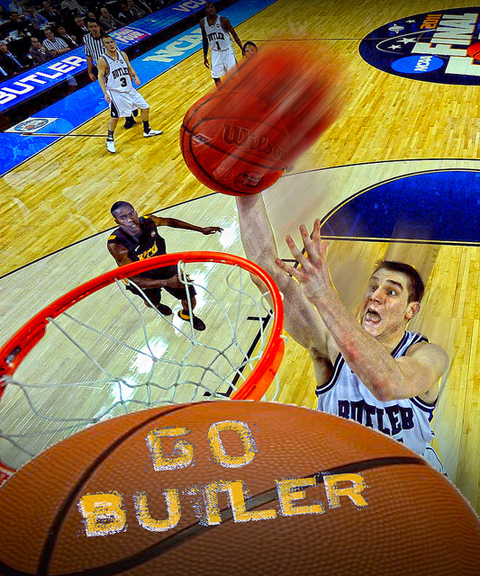
I'm a little late posting this one here, but last month I wrote a story for Wired Playbook on how athletes, much like musicians, seem to have brains that are beefier in certain areas.
Instead of just comparing the brains of athletes to non-athletes -- a correlation that wouldn't necessarily show if sports causes the brain to gain mass or if people with a thicker cortex in these areas are more likely to excel in athletic competition in the first place -- the researchers determined how each year of practice correlated to changes in the brain:
However, in one of the brain areas studied, the researchers found that the number of years each athlete competed as a diver nearly predicted how thick the subject’s brain would be. If the results of this small study hold, there may be some biological truth to the adage, “practice makes perfect.” It’s as if each year of sports experience becomes neatly folded as a new layer of neurons atop previously mastered skills, physical knowledge, and competition know-how that have already been crammed into the brain.
I think it's interesting to think about how these findings could impact sports statistics in the future. I mused:
These findings provide a small glimpse of how biometric and neurological data may one day be used to gauge a player’s ability and performance. Granted, there’s still a lot of work to be done in understanding exactly what’s going on in an athlete’s head.
Read the entire story here.
Photo via Flickr / alandberning

Wei, G., Zhang, Y., Jiang, T., & Luo, J. (2011). Increased Cortical Thickness in Sports Experts: A Comparison of Diving Players with the Controls PLoS ONE, 6 (2) DOI: 10.1371/journal.pone.0017112
Brian Mossop is currently the Community Editor at Wired, where he works across the brand, both magazine and website, to build and maintain strong social communities. Brian received a BS in Electrical Engineering from Lafayette College, and a PhD in Biomedical Engineering from Duke University in 2006. His postdoctoral work was in neuroscience at UCSF and Genentech.
Brian has written about science for Wired, Scientific American, Slate, Scientific American MIND, and elsewhere. He primarily cover topics on neuroscience, development, behavior change, and health.
Contact Brian at brian.mossop@gmail.com, on Twitter (@bmossop), or visit his personal website.
Monitoring patients' health remotely
Over at Wired Playbook, I wrote a piece about a group of researchers using ECG sensors, GPS, accelerometers, and a mobile phone to accurately monitor a patient with heart trouble, in real-time, during their prescribed exercise routine.

Over at Wired Playbook, I wrote a piece about a group of researchers using ECG sensors, GPS, accelerometers, and a mobile phone to accurately monitor a patient with heart trouble, in real-time, during their prescribed exercise routine.
...[E]ven in this small pilot study, the device proved some worth: On two separate occasions, the researchers noted distinct abnormalities in a patient’s ECG and consulted with a cardiologist. While the cardiac events turned out to be benign, the fact that such subtleties could be picked up with remote monitoring holds much promise for the tech. Had a more serious medical emergency transpired, the researchers could have summoned an ambulance to the scene using the transmitted GPS data.
Though this was a small pilot study, the proof-of-concept research was a cool step forward for remote monitoring of health.
Read the entire article here.
Photo via Flickr / rwk
Worringham, C., Rojek, A., & Stewart, I. (2011). Development and Feasibility of a Smartphone, ECG and GPS Based System for Remotely Monitoring Exercise in Cardiac Rehabilitation PLoS ONE, 6 (2) DOI: 10.1371/journal.pone.0014669
Brian Mossop is currently the Community Editor at Wired, where he works across the brand, both magazine and website, to build and maintain strong social communities. Brian received a BS in Electrical Engineering from Lafayette College, and a PhD in Biomedical Engineering from Duke University in 2006. His postdoctoral work was in neuroscience at UCSF and Genentech.
Brian has written about science for Wired, Scientific American, Slate, Scientific American MIND, and elsewhere. He primarily cover topics on neuroscience, development, behavior change, and health.
Contact Brian at brian.mossop@gmail.com, on Twitter (@bmossop), or visit his personal website.
Have Athletes Reached Their Peak?
I've been out of the country for the past weeks, which may explain my silence on the blog.
However, while I was gone, my latest post at Wired Playbook ran on September 29th.

I've been out of the country for the past weeks, which may explain my silence on the blog.
However, while I was gone, my latest post at Wired Playbook ran on September 29th.
At the 2008 Summer Olympics in Beijing, swimmers set 25 world-record times while dominating the National Aquatic Center’s pool. By comparison, only five world records changed hands during the track and field events. But many of those swimming records fell only as a result of newly instituted bodysuit technology, relative advances that aren’t applicable to runners, high-jumpers, and shotputters.
Have humans reached their peak athletic performance? One study argues that’s the case, and that without the continued use of technology, the past roars of Olympic crowds will one day be nothing but whimpers in the stands.
Read More here.
photo via Flickr/marcopako
Berthelot, G., Tafflet, M., El Helou, N., Len, S., Escolano, S., Guillaume, M., Nassif, H., Tolaïni, J., Thibault, V., Desgorces, F., Hermine, O., & Toussaint, J. (2010). Athlete Atypicity on the Edge of Human Achievement: Performances Stagnate after the Last Peak, in 1988 PLoS ONE, 5 (1) DOI: 10.1371/journal.pone.0008800