About Drug Story, my new podcast

DRUG STORY, my new podcast about the disease business - one drug at a time - is live.
The first episode, on the EpiPen and food allergies, is available now at Substack, Apple, Spotify, or wherever you get your podcasts.
Every episode tells a new story about some familiar drugs, from Zoloft to Lipitor to Xanax to Testosterone (but is Low T *really* a disease? We get into that in Episode 6).
And along the way, we try to tell new stories about the conditions these drugs treat:
-Why the epidemic of food allergies in children was exacerbated by years of exactly the WRONG professional guidance.
-Why so much insomnia is the result of the very modern world we’ve built, with all its scrolling and alarms.
-Why obesity is most certainly not a matter of will power or self control, but the inevitable result of the Green Revolution in agriculture, which made grain cheap and abundant.
Most of all, we tried to make something fun. Like my favorite podcasts - Planet Money, 99% Invisible, or Cautionary Tales - Drug Story aims to inform and entertain.
There are only 10 episodes in this first season, so please download early and often!
Special thanks to Molly Woerner, Rachel Swaby, Audrey Ngo, Elise Hu, and Mark Bush for teaching me the ropes. And thanks to Adam Brodsley for designing the amazing Drug Story logo.
Want to Get Stuff Done? Write It Down.
My latest column in INC. magazine is up, about how important it is to document processes and protocols and insights. You'd think as a writer this would've been second nature to me, but it's actually something I learned from working with engineers at Iodine and GoodRx.
My latest column in INC. magazine is up, about how important it is to document processes and protocols and insights. You'd think as a writer this would've been second nature to me, but it's actually something I learned from working with engineers at Iodine and GoodRx.
Write it down. Document your processes and protocols. Put them on paper. Like many of my favorite startup best practices, documentation has a long history among software developers, who are often asked to create documents that ride along with their software--the ReadMe doc being the quintessential example.
But documentation goes beyond software; it's good discipline, both for startups right out of the gate and for those soaring on a high-growth rocket. For the newbies, it's a way to inscribe your company's structures and strictures, to substantiate the firm you want to create. When it's only two people in a garage, documentation on core principles and strategies serves as testimony that this new thing is going to outgrow this garage someday. For those on the rocket, good documentation fuels your company with fluid communication and prevents it from being dragged down by cloistered knowledge.

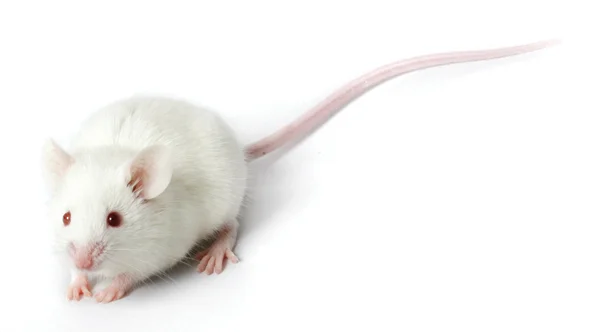
Where the White Lab Mouse Came From
The white lab mouse is one of the most definitive icons of science. So where does this creature come from? Potentially the first was used by necessity in one of the most important experiments in scientific history.
Among the signature icons of science, the white lab mouse is also among the most evocative: an animal design, bred, and built to be experimented upon, dosed and dissected. The white mouse looks pure, almost sterile, and captures so much of what we expect from modern science: uniformity and predictability. These days, you can buy lab mice like any tool or gadget. They even have names like CD-1 and J:NU 007850.
So where does the white lab mouse come from?
There are a few stories out there, but perhaps the earliest use of the white lab mouse occured in a small village of Wollstein, Germany (now Wolsztyn, Poland) in the 1870s. The story is this:
At the time, Robert Koch was a struggling young physician in Wollstein, with a keen desire to make his mark in the world. When an epidemic of anthrax afflicted nearby sheep farms (Wollstein, as the name suggests, was a center of wool production), Koch decided he'd put a new microscope to use and try to discern the cause.
For weeks, Koch conducted experiments, trying to isolate the strange animals he saw swimming in the blood of diseased animals. He kept a backyard menagerie of guinea pigs and rabbits with his daughter, Gertrud, and these animals proved useful: he would isolate the particles and grow them, then inject them in another animal. As Koch's experiments went on, Gertrud grew concerned that she was losing all her pets. He needed a new pool of animals to experiment upon. So Koch and his wife set mousetraps in the horse barn behind their house.
They caught a bounty, and stuffed them into tall glass jars with some holes pocked in the lid for air. When Koch needed an animal, he pulled one out, tail-first, using an old bullet extractor he’d saved from the war. After the mouse died, Koch would dissect it, searching for the bacteria – and then disposing of the cadaver by burning them in the oven. After several months, Koch had successfully repeated his experiments to his satisfaction. He had proven that anthrax was caused by these bacteria - the first definitive evidence that a disease was caused by a germ.
Clearly, Koch needed a better, more consistent supply of animals. By happenstance, a friend sent Gertrud some white albino mice as pets. The animals began reproducing rapidly, and soon Koch had taken the pick of the litter and nurtured them into a new supply to be used in his lab on other experiments.
These became one of Koch’s most iconic contributions to science: the white lab mouse.
(There's lots more on Koch's contributions to science, including the invention of the Petri dish, in The Remedy)
'Microbe Hunters' With A Modern Sensibility
Thank you to David Shaywitz for the thoughtful Forbes write-up of The Remedy!
Thank you to David Shaywitz for the thoughtful Forbes write-up of The Remedy!
"Goetz’s easy familiarity with medicine suffuses the pages of The Remedy, a thoughtful, patient, ultimately fascinating account of the struggle of 19th century science, and society, to come to grips with the germ theory of illness, and develop new technologies to take on one of humanity’s oldest scourges, tuberculosis."
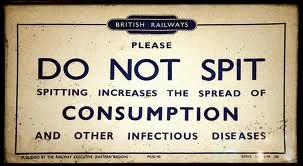
Rules Against Spitting
The story of Robert Koch and tuberculosis is, in part, a story about how one scientist's discovery under a microscope works its way into a new social truth. In other words, it's one thing to prove to scientists that those bacteria under the scope are the agents of disease. But it it quite another thing to change society, so that ordinary people comprehend the true nature of germs and how they must change their own daily habits and behaviors. That is a much harder challenge, and it's one science is still struggling with.
One wonderful example of how this social shift took place is this list of 19 rules for children, a list that first appeared around the turn of the 20th century in a pamphlet called "The True Story of Tuberculosis."
The story of Robert Koch and tuberculosis is, in part, a story about how one scientist's discovery under a microscope works its way into a new social truth. In other words, it's one thing to prove to scientists that those bacteria under the scope are the agents of disease. But it it quite another thing to change society, so that ordinary people comprehend the true nature of germs and how they must change their own daily habits and behaviors. That is a much harder challenge, and it's one science is still struggling with.
One wonderful example of how this social shift took place is this list of 19 rules for children, a list that first appeared around the turn of the 20th century in a pamphlet called "The True Story of Tuberculosis."
Rules for Children
1. Do not spit.
2. Do not let others spit.
3. If you have a cough, and must spit, use a paper napkin or a piece of newspaper, and put it in the stove.
4. Get plenty of fresh air; keep your win- dows open at night, no matter what the weather may be.
5. Do not allow anyone to kiss you on the lips.
6. Do not stay near anyone who has a cough.
7. Take a warm bath once or twice a week, and bathe your face, neck, chest and arms with cold water every morning.
8. Always hold a handkerchief over your mouth and nose, when you cough or sneeze.
9. Always breathe through your nose. If it is stopped up, and you have to open your mouth to breathe, go to a doctor or dispensary. You cannot be well unless you breathe through your nose.
10. Do not wrap heavy mufflers or furs around your neck.
11. Use your toothbrush after each meal.
12. Wash your hands with soap and water before each meal.
13. Never eat too much.
14. Drink all the milk you can get, and very little tea or coffee.
15. Do not lie on the bed with a sick person.
16. Avoid children who have any contagious disease.
17. Do not spit on your slate, or put your fingers in your mouth, before you turn the pages of a book.
18. Do not put things in your mouth that other children have had in theirs, such as whistles, spit blowers, chewing gum and pencils. Do not bite from the same apple that some one else has been eating.
19. And last as well as first, DO NOT SPIT.
'When TB Was a Death Sentence'
The Daily Beast has published an excerpt from The Remedy. Give it a read, then order your own copy of the book.
Plus, check out my interview with The Daily Beast's Tessa Miller. We talked about what drew me to the story and how Twitter helped me write the book.
The Daily Beast has published an excerpt from The Remedy. Give it a read, then order your own copy of the book.
Plus, check out my interview with The Daily Beast's Tessa Miller. We talked about tuberculosis and scientific discoveries, what drew me to the story and how Twitter helped me write The Remedy.
Tackling Health Information Overload
Listen to the latest episode of WGBH's Innovation Overload podcast for my discussion with Kara Miller.
Listen to the latest episode of WGBH's Innovation Overload podcast for my discussion with Kara Miller. We talked about the importance of user-friendly design in changing health behaviors, and Robert Koch's discovery of germ theory and search for a cure to TB.
Thanks to Kara for the great conversation!
A 'Fascinating and Entertaining New Page Turner'
Thank you to the Los Angeles Times for its wonderful review of The Remedy!
Thank you to the Los Angeles Times for calling The Remedy a "fascinating and entertaining new page turner of a book"!
"The Remedy is a thoroughly enjoyable and illuminating journey through several decades of European history and an intimate portrait of two once-obscure doctors who shaped it. It's a book that illustrates how the imagination and the intellect can work in concert to cure a disease, or to delight an audience of millions." - Los Angeles Times

The Story of The Remedy
In 2005, when I was mulling going back to school for my Masters in Public Health, my father sent me a recent copy of the New England Journal of Medicine with a special section on “Medical Detectives.” There were two stories that were especially compelling: the first was a tribute to Berton Roueche, a wonderful writer for the New Yorker in the 1950s and 1960s, who specialized in ride-alongs with the New York City Department of Health epidemiology squad. His stories read like a sort of tweedy version of CSI, and the collections, especially 11 Blue Men, were favorites in the Goetz household.
The other story in that issue of NEJM concerned an odd coincidence between
In 2005, when I was mulling going back to school for my Masters in Public Health, my father sent me a recent copy of the New England Journal of Medicine with a special section on “Medical Detectives.” There were two stories that were especially compelling: the first was a tribute to Berton Roueche, a wonderful writer for the New Yorker in the 1950s and 1960s, who specialized in ride-alongs with the New York City Department of Health epidemiology squad. His stories read like a sort of tweedy version of CSI, and the collections, especially 11 Blue Men, were favorites in the Goetz household.
The other story in that issue of NEJM concerned an odd coincidence between Robert Koch, an eminent 19th century bacteriologist, and Arthur Conan Doyle, during his medical days. Again, this story resonated with me, because the Sherlock Holmes stories were a favorite in our family, especially beloved by my sister Cecilia. In a brief one-and-a-half pages, the NEJM piece described an episode where these two giants of history, Koch and Conan Doyle, collided. In 1890, Koch claimed to have a remedy for tuberculosis, and announced a demonstration that Conan Doyle, then an anonymous local doctor in England, rashly decided to attend.
That demonstration would turn out to be a pivotal episode in both men’s life (And, it would turn out, in mine). Conan Doyle found himself playing detective and investigating whether Koch’s remedy could, in fact, cure tuberculosis. The effort convinced Conan Doyle to give up his medical practice and turn to his writing with conviction - particularly to some stories involving an odd sort of detective named Sherlock Holmes. Robert Koch, meanwhile, would find that the scent of a remedy would tempt him away from his core values, particularly the meticulously rigorous scientific protocol he was famous for. Instead, he rushed headlong towards the fame and fortune that seemed his destiny. He would be proven sadly wrong.
For me, this short essay suggested a larger story. "This would be a great book," I remember thinking. I couldn't believe nobody had written it yet. As it turned out, it would take me nearly a decade to actually bring it to life. At last, today - April 3 - the full story is now out. It is my second book, The Remedy, and I am truly proud of it, and excited to see what the world makes of it. My father, himself a doctor, was I think very proud that I had taken that article and had designs to turn it into something greater. In 2011, when I signed with Gotham Books to write the book, he was thrilled. I was glad to have shared the book proposal with him before I sent it off. Alas, he is not here to see the book actually appear, having died in 2012 at the age of 90. I’m very glad that he knew it was on the way.
And my sister Cecilia would’ve surely been proud of her little brother. She died in 1998 in Uganda, while working on a global health project. Her work in public health inspired me to play hooky from my day job for a couple years to earn my own credentials in the field. I’m so very sad that she, too, isn’t here to share the joy of The Remedy with me. The Remedy is dedicated to both my father and my sister, because the book would not exist if not for both of them. All of which is to say that The Remedy is for me a very personal book, one that ties together my youth, spent reading medical detective stories in both fact and fiction, and my academic efforts, which began with a degree in literature and ended with that MPH, as well as my professional career, in which I have endeavored to explain complicated ideas and to discern the true patterns of innovation.
The Remedy is the sum of those elements. But mostly, I hope, it’s a book that will appeal to a great many people simply because it is a captivating story about a fascinating time and complicated individuals. It is a story about how contemporary science came to be, and how modern medicine is very much still a work in progress. And it tells a tale about the past that helps us understand our present. Most of all, though, it is the sort of book that I myself would like to read.
'The Strange Connection Between Germs and Sherlock Holmes'
In the latest issue of WIRED, I talk with Caitlin Roper about the importance of Robert Koch, the role of germ theory in changing public behavior and how Sherlock Holmes creator Arthur Conan Doyle fits into this. Head on over to WIRED to read the full interview.
In the latest issue of WIRED, I talk with Caitlin Roper about the importance of Robert Koch, the role of germ theory in changing public behavior and the strange ties to Sherlock Holmes. Head on over to WIRED to read the full interview.

"Sherlock Holmes Statue" by Julian is licensed under CC BY-ND 2.0