Helmets make sports less safe
That was the gist of a headline I read on The Atlantic this morning.
At first blush, I thought the commentary by Edward Tenner on a recent NYT report was overreaching a bit. How could helmets, which protect the head, make sports more hazardous. But as I read on, I saw the point he was trying to make.
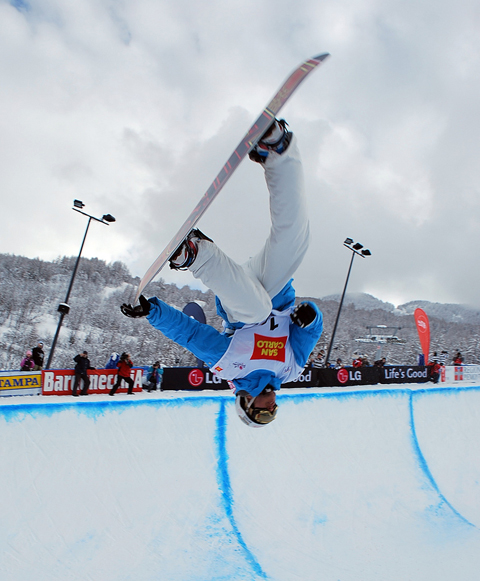
That was the gist of a headline I read on The Atlantic this morning.
At first blush, I thought the commentary by Edward Tenner on a recent NYT report was overreaching a bit. How could helmets, which protect the head, make sports more hazardous. But as I read on, I saw the point he was trying to make.
In certain situations, helmets may give an athlete a false sense of security. With their noggin firmly secured in a near-indestructible plastic casing, the theory goes, some contact sport athletes might deliver hits they'd otherwise shy away from.
The NYT article focuses on women's lacrosse, where helmets are currently only worn by goalkeepers. In fact, the other players are banned from wearing helmets. And many of the sport's competitors would like to keep it that way.
But the crusaders are facing an uphill battle because the idea that players engage in riskier behavior when they wear helmets, well, that's difficult to prove. Most of the evidence presented is anecdotal -- like the fact that hockey and football hits became noticeably more vicious after the professional leagues instituted helmet policies.
Everyone knows I'm a staunch supporter of protective headgear for snowsports and bicycling. But I can see the points being made for continuing bans on head gear in certain sports. Strap a helmet on or lacrosse player and the game dynamic changes a bit. Why worry about finesse and skill when you can just bowl your opponent over?
Perhaps we need to better define which sports draw higher risks for head injury by their very nature, opposed to those where the head protection creates the danger in the first place.
Doctors and sports officials need to seriously consider the increasing evidence that concussions are associated with cognitive decline in later life, and the fact that concussions are on the rise in contact sports, a topic I've written about before.
Riddell, a football helmet manufacturer, isn't standing around idly either, and has been working on next-generation gear that might reduce the impact a crushing hit has on the brain. The company placed tiny accelerometer sensors inside the helmet, and collected a drumbeat of data on what happens inside, presumably where your brain would be -- when the headgear is subjected to blows from various angles.
All steps in the right direction, though everyone agrees more data is needed. And not just for technological shift, but a deeper understanding of athlete behavior is needed, too.
Brian Mossop is currently the Community Editor at Wired, where he works across the brand, both magazine and website, to build and maintain strong social communities. Brian received a BS in Electrical Engineering from Lafayette College, and a PhD in Biomedical Engineering from Duke University in 2006. His postdoctoral work was in neuroscience at UCSF and Genentech.
Brian has written about science for Wired, Scientific American, Slate, Scientific American MIND, and elsewhere. He primarily cover topics on neuroscience, development, behavior change, and health.
Contact Brian at brian.mossop@gmail.com, on Twitter (@bmossop), or visit his personal website.
Using Cadaver Legs to Study ACL Injuries
My latest post at Wired Playbook profiles Mark Drakos, an orthopedic surgeon who uses cadaver legs to test the biomechanics of ACL injuries:

My latest post at Wired Playbook profiles Mark Drakos, an orthopedic surgeon who uses cadaver legs to test the biomechanics of ACL injuries:
At times, Drakos seems like a typical orthopedist: seeing patients, prescribing meds, performing surgery. But in the lab, Drakos — always drawing on his previous athletic experience — turns orthopedic research into a team sport. Though he works with a dedicated group of researchers, the stars of Drakos’ squad are his custom-built rig, dubbed the ACL Dominator, and the troves of cadaver legs that cycle through the lab for testing.
Read the entire story here.
Photo via Flickr/TheBusyBrain

Drakos MC, Hillstrom H, Voos JE, Miller AN, Kraszewski AP, Wickiewicz TL, Warren RF, Allen AA, & O'Brien SJ (2010). The effect of the shoe-surface interface in the development of anterior cruciate ligament strain. Journal of biomechanical engineering, 132 (1) PMID: 20524741