TED & the Inspiration Behind Iodine
TED published a new story about the impact of my TED talk on redesigning medical data and the role it played in inspiring me to found the health technology company Iodine.
Earlier this year, TED published a nice story about the impact of my TED talk on redesigning medical data and the role it played in inspiring me to found the health technology company Iodine. The TED piece provided a first look at Iodine's Med Labels project.
In mid-December 2013 Iodine launched its first project: Med Labels, which are redesigned FDA drug labels. Search for any FDA-approved drug in the Med Labels database, and you’ll see all the information submitted by drug companies to the FDA in an easy-to-read format, indexed with links for jumping to relevant information … Check out Iodine’s labels, versus the FDA originals, at the bottom of this post.
Iodine’s easy-to-understand Med Label for Prozac. Click on the image to see it a little bigger.
A look at the FDA’s label for Prozac. Click on the image to read its sprawling complexity in detail.
Also, I've been blogging over on the Iodine Blog. Check out my interviews with Susannah Fox and Eric Topol.
Miracle berries: the artificial sweetener that never was
The small, red berries of the _Richadella dulcifica_ plant are not very sweet. In fact, miraculin, the main chemical found in the berry's flesh tastes like, well, nothing. But after eating these berries, people's taste buds embark on an hour-long wild ride, so that any sour foods they eat -- even lemons -- will taste sweeter than candy. Quite trippy
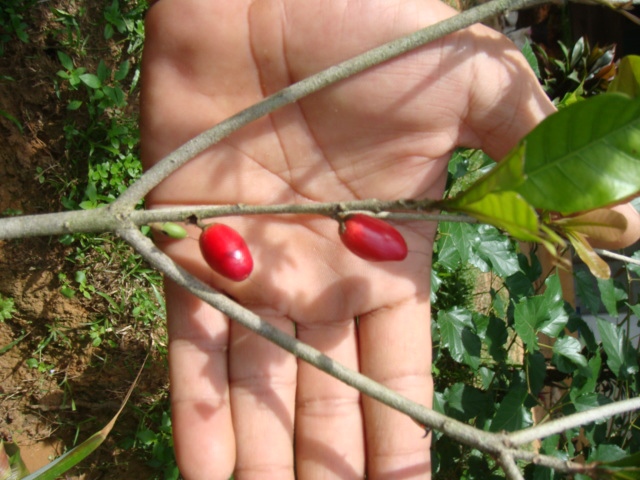
The small, red berries of the _Richadella dulcifica_ plant are not very sweet. In fact, miraculin, the main chemical found in the berry's flesh tastes like, well, nothing. But after eating these berries, people's taste buds embark on an hour-long wild ride, so that any sour foods they eat -- even lemons -- will taste sweeter than candy. Quite trippy.
A new paper published in PNAS describes how this process works: miraculin binds to receptors in the tongue, partially blocking the taste buds that identify sweet foods under normal conditions. But if something acidic, like the juice from a sour lemon, interacts with miraculin, the molecule shape-shifts, and suddenly, the sweet taste receptors are kicked into high gear. Although the same lemons would taste sour to anyone else, miraculin makes them taste sweet.
As interesting as the finding may be, the backstory is even better.
In the 1960s, biomedical scientist Robert Harvey first reported these miracle berries, as they're called, which locals in west Africa had eaten for centuries. Quickly realizing the potential these fruits might have for making bad-tasting, good-for-you foods more palatable, as well as the role this type of artificial sweetener might play on diseases like diabetes, Harvey organized a new venture, the Miralin Company, to bring the additive to market, complete with the financial backing of heavy-hitter investors like Reynolds Metals, Barclays and Prudential.
Initial talks with the FDA went well, Harvey reported. But the night before the company's launch in 1974, the FDA got cold feet. The food was an additive, the government agency now decried, and in order to sell their product, Harvey would have to run the miracle berries through many more years of expensive testing. The new directives proved too extensive for the fledgling company to bear.
But as Harvey prepared to shelve his idea, he realized he was not the only one watching Miralin's door's close. As he told the BBC:
A few weeks later, things turned sour. A car was spotted driving back and forwards past Miralin's offices, slowing down as someone took photographs of the building. Then, late one night, Harvey was followed as he drove home. "I sped up, then he sped up. I pulled into this dirt access road and turned off my lights and the other car went past the end of the road at a very high speed. Clearly I was being monitored. I honestly believe that we were done in by some industrial interest that did not want to see us survive because we were a threat. Somebody influenced somebody in the FDA to cause the regulatory action that was taken against us.
Whether Harvey was in fact being tailed by Big Sugar, or just a disgruntled ex-lab mate -- who knows. But I'm willing to bet the farm that these new findings have tickled the sweet tooth of a commercial entity somewhere out there, in one way or another.
Photo via Flickr /
Brian Mossop is currently the Community Editor at Wired, where he works across the brand, both magazine and website, to build and maintain strong social communities. Brian received a BS in Electrical Engineering from Lafayette College, and a PhD in Biomedical Engineering from Duke University in 2006. His postdoctoral work was in neuroscience at UCSF and Genentech.
Brian has written about science for Wired, Scientific American, Slate, Scientific American MIND, and elsewhere. He primarily cover topics on neuroscience, development, behavior change, and health.
Contact Brian at brian.mossop@gmail.com, on Twitter (@bmossop), or visit his personal website.
The rules of raw milk
As I start weighing the evidence for or against the raw milk movement, at least one thing seems clear: the government isn’t exactly friendly to the idea, as they mandate, and enforce, a lot of regulations in this space.
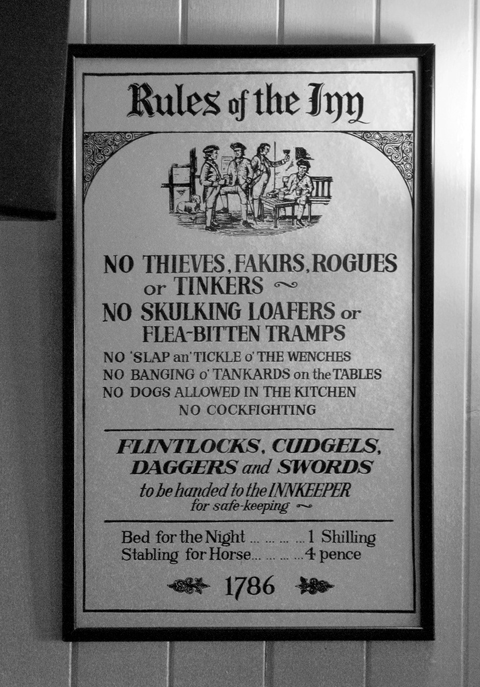
As I start weighing the evidence for or against the raw milk movement, at least one thing seems clear: the government isn’t exactly friendly to the idea, as they mandate, and enforce, a lot of regulations in this space.
Three months ago, NPR reported that the FDA was cracking down on a Northern California dairy farm that makes the wildly popular, high-end ($20 per pound) Point Reyes Farmstead Cheese Company, an operation run by Jill Giacomini Basch and her sisters.
According to Basch, the sisters have never pasteurized their artisanal cheese, allowing it to keep a “farmy” taste (whatever that means). In the past, the FDA has stayed clear of the family's farm, because Basch followed their protocol: age unpasteurized cheese for 60 days to kill any E. coli bacteria that’s camping among its ridges.
But after two large-scale raw milk-related recalls, the FDA got spooked. They second-guessed themselves, mumbling about whether 60 days was in fact long enough to kill the harmful bacteria. And now many farm owners are holding their breath to see what the government’s new standards will be, and whether the changes will run them out of business.
The second interesting thing I found is that once federal hurdles have been cleared, purveyors still have to deal with their individual state governments. And it’s not just cheeses, or the raw milk enthusiasts, that are under scrutiny.
Last week, The Economist told the story of Homa Dashtaki, an immigrant whose family came to the US from Iran in 1984. Embracing the foodie culture of California, Dashtaki decided to make and sell her father’s secret family recipe yogurt, the type of craft food you’d expect to find in an outside stand of a farmer’s market.
Though Dashtaki’s recipe calls the same processed milk that one can get in a gallon jug in any supermarket, the California Department of Food and Agriculture told her that the state’s code requires that everyone producing yogurt must have the equipment that’s needed to pasteurize their product. She explained that she was already using pasteurized milk, but they didn't budge. Ultimately she gave in, conceding to their ridiculous requests. But the agency still wasn’t satisfied, because even with the equipment in hand, she would be re-pasteurizing pasteurized milk, which was also a violation of their antiquated rules.
So the rules prevent her from following the rules...yep, seems about right for government directives.
** Read post 1 here: So long, raw milk cheese **
Photo via Flickr / By DanBrady
Brian Mossop is currently the Community Editor at Wired, where he works across the brand, both magazine and website, to build and maintain strong social communities. Brian received a BS in Electrical Engineering from Lafayette College, and a PhD in Biomedical Engineering from Duke University in 2006. His postdoctoral work was in neuroscience at UCSF and Genentech.
Brian has written about science for Wired, Scientific American, Slate, Scientific American MIND, and elsewhere. He primarily cover topics on neuroscience, development, behavior change, and health.
Contact Brian at brian.mossop@gmail.com, on Twitter (@bmossop), or visit his personal website.
Finding the FDA's Drug Safety Information Online
A smart post by The Sunlight Foundation's Nancy Watzman has me thinking about what it really means to have access to all of our personal health data. In the past, I've myopically viewed personal health data as anything that my body produced, in one way or another, and now sits in my shadowy file at the doctor's office. Things like X-rays, MRIs, and blood test results. No doubt, I should have access to all of this information. What about prescription medication? Sure, I can easily make a list of the meds I'm currently taking, or get my doctor to hand this list over if memory fails me. But how much do I really know about these drugs? Most people, myself included, take our doctor's word when he or she decides to put us on a commonly prescribed medications. For example, let's say a patient has blood-work that shows elevated LDL cholesterol on two consecutive screenings, comes from a family where cardiovascular disease runs rampant, and was previously unable to regulate cholesterol levels with strict diet and exercise regimes. If the doctor prescribed Lipitor to treat the problem, a patient may not even think twice about taking it. After all, we see commercials for such drugs on our TV, and we flip past their ads in our magazines. Direct-to-consumer marketing by pharmaceutical companies makes drugs familiar and, presumably, safe.
A smart post by The Sunlight Foundation's Nancy Watzman has me thinking about what it really means to have access to all of our personal health data. In the past, I've myopically viewed personal health data as anything that my body produced, in one way or another, and now sits in my shadowy file at the doctor's office. Things like X-rays, MRIs, and blood test results. No doubt, I should have access to all of this information. What about prescription medication? Sure, I can easily make a list of the meds I'm currently taking, or get my doctor to hand this list over if memory fails me. But how much do I really know about these drugs? Most people, myself included, take our doctor's word when he or she decides to put us on a commonly prescribed medications. For example, let's say a patient has blood-work that shows elevated LDL cholesterol on two consecutive screenings, comes from a family where cardiovascular disease runs rampant, and was previously unable to regulate cholesterol levels with strict diet and exercise regimes. If the doctor prescribed Lipitor to treat the problem, a patient may not even think twice about taking it. After all, we see commercials for such drugs on our TV, and we flip past their ads in our magazines. Direct-to-consumer marketing by pharmaceutical companies makes drugs familiar and, presumably, safe.
But regardless of what advertisements say, the FDA is ultimately responsible for giving drugs the safety stamp of approval. The decision to approve a drug is based on substantial amounts of preclinical (testing in animals) and clinical (testing in humans) data submitted to the FDA by the drug manufacturer.
Let's say someone – a doctor, a patient, a concerned citizen – wants to review the data that the FDA uses to approve a drug. If the drug you're taking was approved after 1998, you can find the FDA's review documents online. If you're prescribed an older medicine, you may strike out when trying to find what the FDA has to say about it. The government's information on drugs approved through 1997 may be released if someone makes a request through the Freedom of Information Act, but the FDA reserves the right to not publish reports if the agency deems the preserved documents are of “poor quality”. In fact, Watzman found that online safety information is missing for 9 of the 25 most commonly prescribed drugs.
For older and newer drugs alike, when the FDA publishes a review online, it's never in a text-searchable format. Rather, the agency prints the original paperwork, edits with white-out to cover “propriety information”, scans the newly edited document, and finally, posts the altered PDFs online.
Are these edited documents, with words covered with white-out and entire sections omitted, really providing us with useful information? Somewhere along the drug approval process, there has to be a succinct memo that circulates around the FDA headquarters describing the agency's major findings on a particular drug. Why can't the FDA publish a simple summary of their findings?
Skeptics may argue that detailed information about a drug already published by pharmaceutical companies in medical journals, such as the New England Journal of Medicine (NEJM) or the Journal of the American Medical Association (JAMA), should suffice. However, there are two problems with the information reported in medical journals. First, most of these journals are not open access, meaning the average consumer cannot access them without paying for the article. Second, many drug companies only publish positive findings, and bury negative results that show less than desirable efficacy or safety.
Watzman's report is an eye-opening look at what's wrong with the flow of drug information as it goes from pharmaceutical company to the FDA to the consumer. If pharmaceutical companies are allowed to market directly to consumers, we should demand the right to know what the FDA has to say about the safety of these drugs.