The rules of raw milk
As I start weighing the evidence for or against the raw milk movement, at least one thing seems clear: the government isn’t exactly friendly to the idea, as they mandate, and enforce, a lot of regulations in this space.
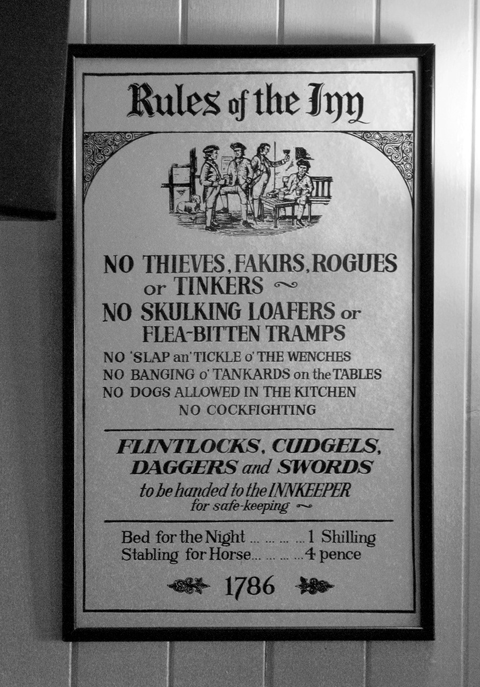
As I start weighing the evidence for or against the raw milk movement, at least one thing seems clear: the government isn’t exactly friendly to the idea, as they mandate, and enforce, a lot of regulations in this space.
Three months ago, NPR reported that the FDA was cracking down on a Northern California dairy farm that makes the wildly popular, high-end ($20 per pound) Point Reyes Farmstead Cheese Company, an operation run by Jill Giacomini Basch and her sisters.
According to Basch, the sisters have never pasteurized their artisanal cheese, allowing it to keep a “farmy” taste (whatever that means). In the past, the FDA has stayed clear of the family's farm, because Basch followed their protocol: age unpasteurized cheese for 60 days to kill any E. coli bacteria that’s camping among its ridges.
But after two large-scale raw milk-related recalls, the FDA got spooked. They second-guessed themselves, mumbling about whether 60 days was in fact long enough to kill the harmful bacteria. And now many farm owners are holding their breath to see what the government’s new standards will be, and whether the changes will run them out of business.
The second interesting thing I found is that once federal hurdles have been cleared, purveyors still have to deal with their individual state governments. And it’s not just cheeses, or the raw milk enthusiasts, that are under scrutiny.
Last week, The Economist told the story of Homa Dashtaki, an immigrant whose family came to the US from Iran in 1984. Embracing the foodie culture of California, Dashtaki decided to make and sell her father’s secret family recipe yogurt, the type of craft food you’d expect to find in an outside stand of a farmer’s market.
Though Dashtaki’s recipe calls the same processed milk that one can get in a gallon jug in any supermarket, the California Department of Food and Agriculture told her that the state’s code requires that everyone producing yogurt must have the equipment that’s needed to pasteurize their product. She explained that she was already using pasteurized milk, but they didn't budge. Ultimately she gave in, conceding to their ridiculous requests. But the agency still wasn’t satisfied, because even with the equipment in hand, she would be re-pasteurizing pasteurized milk, which was also a violation of their antiquated rules.
So the rules prevent her from following the rules...yep, seems about right for government directives.
** Read post 1 here: So long, raw milk cheese **
Photo via Flickr / By DanBrady
Brian Mossop is currently the Community Editor at Wired, where he works across the brand, both magazine and website, to build and maintain strong social communities. Brian received a BS in Electrical Engineering from Lafayette College, and a PhD in Biomedical Engineering from Duke University in 2006. His postdoctoral work was in neuroscience at UCSF and Genentech.
Brian has written about science for Wired, Scientific American, Slate, Scientific American MIND, and elsewhere. He primarily cover topics on neuroscience, development, behavior change, and health.
Contact Brian at brian.mossop@gmail.com, on Twitter (@bmossop), or visit his personal website.
So long, raw milk cheese
One of the biggest battles between strong scientific evidence and those with a downright pigheaded refusal to accept the facts isn’t happening inside a medical clinic, but in the dairy fields of Northern California.
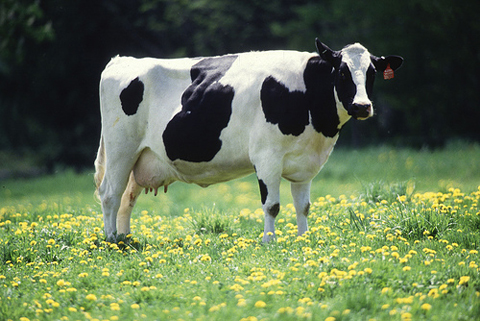
One of the biggest battles between strong scientific evidence and those with a downright pigheaded refusal to accept the facts isn’t happening inside a medical clinic, but in the dairy fields of Northern California.
Nothing screams “Foodie” like being a self-proclaimed artisanal cheese connoisseur. Don’t believe me? Check out the lines of people stacked three deep at your local Whole Foods cheese counter on a Saturday morning, all waiting to get their fill of a distinctly bold raw milk cheddar. Trust me, I know what I’m talking about; I’m the one more than likely pushing my way to the front of the line.
Considering the numerous store recalls on tainted cheeses, study after scientific study showing that pasteurization is the most effective way to keep dairy products safe, and, um, I don’t know, the fact that I’m trained as a scientist, some of you will say that I should know better. And you’re right.
I know where the evidence points. I just don’t heed the advice. Well, I didn’t, until now. So, I’m swearing off raw cheese until I conduct a full investigation of what the risks include. (Happy now?) And instead of writing a monster post, I’m thinking I’ll make this into a series. That way, I can incorporate the feedback I get from readers along the way. Plus there are too many avenues to explore and I don’t feel like organizing the structure of a long post. (Yes, I’ve also developed a newfound zeal for brutal honesty, effective immediately.)
I think I know how this one is going to end , but it will still be fun to see what I learn. And who knows, maybe someone else has the same questions.
Photo via Flickr / Royalty-free image collection
Brian Mossop is currently the Community Editor at Wired, where he works across the brand, both magazine and website, to build and maintain strong social communities. Brian received a BS in Electrical Engineering from Lafayette College, and a PhD in Biomedical Engineering from Duke University in 2006. His postdoctoral work was in neuroscience at UCSF and Genentech.
Brian has written about science for Wired, Scientific American, Slate, Scientific American MIND, and elsewhere. He primarily cover topics on neuroscience, development, behavior change, and health.
Contact Brian at brian.mossop@gmail.com, on Twitter (@bmossop), or visit his personal website.