Kaiser Permanente Health Camp: My First "Un-Conference"
As a prelude to the Health 2.0 conference in San Francisco, I went to Kaiser Permanente's HealthCamp today, located at their amazing Garfield Innovation Center. Being a scientist, I've attended my fair share of conferences over the past years, but none prepared me for what I experienced today at my first "un-conference". First, for those who don't know, an un-conference has no set agenda; the sessions are made up by the attendees the morning of the conference. This way, the topics covered throughout the day truly reflect the attendees' interests.
As a prelude to the Health 2.0 conference in San Francisco, I went to Kaiser Permanente's HealthCamp today, located at their amazing Garfield Innovation Center. Being a scientist, I've attended my fair share of conferences over the past years, but none prepared me for what I experienced today at my first "un-conference". First, for those who don't know, an un-conference has no set agenda; the sessions are made up by the attendees the morning of the conference. This way, the topics covered throughout the day truly reflect the attendees' interests.
First up, were three introductory talks by leaders in the Health 2.0 community. Dr. Robert Pearl, from Kaiser Permanente set the tone for the day when he described a sign he noticed over a decade ago at Oregon Health & Science University that read "Quality, Service, Cost". Dr. Pearl said that the 20th century mentality for health care could only focus on 2 of the 3 at any given time. But now, in the 21st century, we need to address all three simultaneously. Dr. Pearl challenged the notion that doctors are old-school, or that they are unwilling to learn new technologies, claiming that they are constantly looking for innovation.
A common theme in the opening talks was best summarized by Dr. Kaveh Safavi of Cisco, who said we need to distinguish between "personal care" and "in-person care". Dr. Pearl agreed, and believes we are on the cusp on integrating tele-medicine in the emergency room, so that patients will have more, and faster, access to specialists, which will streamline medical care. Patricia Perry, of Intel, concluded the opening remarks with her insight into "Aging at Home", where in-home patient medical monitoring and video-based doctors' visits can actually improve medical care for senior citizens.
I spent the rest of the day floating around to different sessions, trying to absorb as much information as humanly possible. I heard some really interesting concepts being discussed, such as creating a "LifeScape", which is the intersection of our different worlds: such as work, health, and communication. People thought that to be truly innovative, we had to find ways to create "stealth health", where healthy decisions are simply a consequence of another easier choice. One design example was a school's lunch line: research shows that if apples are placed before the sweets in the line, kids are more likely to make the healthier choice.
In another session, I learned about a cool new social media site called Aardvark, which answers users' questions by connecting them with "experts" in the field. So opposed to crowd-sourcing your question to your friends on twitter, now your questions gets directed to the people who may best answer it.
Self-tracking was a popular topic, and I see more and more people unleashing the power of personal data. I heard the battle-cry for more effortless sensors, where data is collected without any extra work by the user. But I found out that many people still aren't interested in the nitty-gritty details of the data. Rather, they wanted all personal metric information to boil down to one measurable "health score" -- a single number that defined their health.
All in all, a solid day of innovation, great conversations, and a heck of a way to kick off Health 2.0 week. Lastly, the organizers did a fantastic job with the event. The un-conference format is great way to initiate dialogue and get involved. I'll definitely be back to HealthCamp next year.
Stay tuned the rest of the week for my updates from the Health 2.0 conference!
Losing Weight Requires the Right Tools, But Not Necessarily the Fanciest Ones
Self-tracking is an effective way to change behaviors. That’s the result of a study conducted last year by the Kaiser Permanente Center for Health Research.
“The more food records people kept, the more weight they lost,” says Jack Hollis PhD, a researcher at KPCHR and lead author of the study published in the August issue of the American Journal of Preventive Medicine. “Those who kept daily food records lost twice as much weight as those who kept no records. It seems that the simple act of writing down what you eat encourages people to consume fewer calories.
Self-tracking is an effective way to change behaviors. That’s the result of a study conducted last year by the Kaiser Permanente Center for Health Research.
“The more food records people kept, the more weight they lost,” says Jack Hollis PhD, a researcher at KPCHR and lead author of the study published in the August issue of the American Journal of Preventive Medicine. “Those who kept daily food records lost twice as much weight as those who kept no records. It seems that the simple act of writing down what you eat encourages people to consume fewer calories.
“Every day I hear patients say they can’t lose weight. This study shows that most people can lose weight if they have the right tools and support,” says Keith Bachman, MD, a Kaiser Permanente internist and weight management specialist. “Keeping a food diary doesn’t have to be a formal thing. Just the act of scribbling down what you eat on a Post-It note, sending yourself e-mails tallying each meal, or sending yourself a text message will suffice. It’s the process of reflecting on what we eat that helps us become aware of our habits, and hopefully change our behavior.”
The study concluded what proponents of self-tracking have known all along, namely, that monitoring your own actions creates a heightened self-awareness. Sure, fancy new iPhone apps where you track your weight or blood-sugar over time are cool, but self-tracking doesn’t have to go hand-in-hand with technology.
Case in point, on my last visit to my mother’s place, I found a home blood pressure monitor and a piece of paper with scribbled numbers on it sitting on a table in the living room. She told me that she has been tracking her blood pressure every day for the past months, and writing the numbers in her notebook log. I had been tracking my running data for years using elaborate web programs, and complicated sensors. But suddenly I realized that self-tracking doesn’t have to be limited to the tech savvy or early adopters; a pen and a piece of paper will do the trick.
What the NYT and Slate Don't Seem to Understand About Behavior Change
Two articles posted online got under my skin this morning, and I just couldn't resist giving my two cents. First, Tara Parker-Pope, of the New York Times says:
Most obesity researchers now agree that metabolic differences, not willpower, are the driving forces behind weight and appetite control. Studies suggest that an imbalance of brain chemicals and hormones, including cortisol, ghrelin, leptin and serotonin, can increase cravings and make certain foods difficult to resist.
Two articles posted online got under my skin this morning, and I just couldn't resist giving my two cents. First, Tara Parker-Pope, of the New York Times says:
Most obesity researchers now agree that metabolic differences, not willpower, are the driving forces behind weight and appetite control. Studies suggest that an imbalance of brain chemicals and hormones, including cortisol, ghrelin, leptin and serotonin, can increase cravings and make certain foods difficult to resist.
Next, Slate's Engber rants:
It's ironic that so many advocates for healthy eating are also outspoken gourmands. Alice Waters, the proprietor of Chez Panisse, calls for a "delicious revolution" of low-fat, low-sugar lunch programs. It's a central dogma of the organic movement that you can be a foodie and a health nut at the same time—that what's real and natural tastes better, anyway. Never mind how much fat and sugar and salt you'll get from a Wabash Cannonball and a slice of pain au levain. Forget that cuisiniers have for centuries been catering to our hedonic hunger—our pleasure-seeking, caveman selves—with a repertoire of batters and sauces. Junk foods are hyperpalatable. Whole Foods is delicious. Doughnuts are a drug; brioche is a treat.
Tara Parker-Pope misses the fact that personal choices (i.e. what she calls 'willpower') directly affect metabolism. Numerous studies have shown that exercise and calorie restriction (aka 'diet') alter the metabolism of our muscle and fat cells, as well as improve cells' resistance to insulin.
High-sugar, high-fat foods are hard to resist no matter who you are. Most of the in-shape people I know have numerous overweight and/or obese relatives. No, these people weren't simply handed the better genes, rather they are in-shape because they constantly bust their ass. They exercise like crazy. At dessert, they pass up the chocolate cake, and take the fruit cup. When they're hungry during the day, they choose a sensible snack as opposed to raiding the company vending machine. These people are not super-heroes. They have spouses and kids. And at the end of a long day they're tired, just like the rest of us. So what keeps them going? Deep down, they know if they stop, they'll just become another statistic. So they pass up that extra half hour of sleep to hit the road for a run at the crack of dawn.
Willpower leads to behavior changes which lead to metabolic alterations; they're not mutually exclusive. Sure, most dieters will never see the drastic results accomplished by participants of 'The Biggest Loser', but Parker-Pope just gave them a reason to not even make the attempt.
As for Engber's article on Slate, he completely overlooks one not-so-little issue: serving size. American fast-food and junk food is packaged in ridiculously-sized (and calorie-laden) servings. I'll bet the farm that the last time you dined at a gourmet restaurant, the waiter didn't ask if you would like to 'Super-Size' your duck confit entree.
Despite my frustration, I agree with Engber on two points: 1.) a fat-tax on sugary beverages and junk food is not the answer to America's health woes, and 2.) such a tax would end up hurting the poor more than anyone else. The differences in price between fresh fruits and vegetables and fast-food/junk-food is really a separate, much larger problem that I'm not going to get into right now.
In both articles, what irks me the most is that we are currently faced with an obesity epidemic. People really don't need to read articles that marginalize the behavior changes that science has shown will make us healthier.
Exercise and Stroke
In a previous post, I talked about evidence that exercise can ward off dementia. Now a study discussed at Science Daily shows new findings in the relationship between exercise and stroke. Stroke is often causes by an ischemic event (lack of blood flow) in the brain, mostly due to a blood clot or atherosclerosis. In essence, stroke is a caused by unhealthy blood vessels. We've known for years that just as in heart disease, diet and exercise also go a long way in preventing stroke.
In a previous post, I talked about evidence that exercise can ward off dementia. Now a study discussed at Science Daily shows new findings in the relationship between exercise and stroke. Stroke is often causes by an ischemic event (lack of blood flow) in the brain, mostly due to a blood clot or atherosclerosis. In essence, stroke is a caused by unhealthy blood vessels. We've known for years that just as in heart disease, diet and exercise also go a long way in preventing stroke.
In this new study, the severity of the stroke in the exercisers and non-exercisers was similar, but those who exercised on a regular basis recovered much quicker. These results are interesting because it shows that exercise could potentially be neuroprotective, and therefore, the brain is in much better shape to recover from a temporary lapse in blood flow. So even if your exercise routine doesn't prevent the stroke, your chances of recovering seem much better.
My Sleep Coach Just Told Me to...Well, Sleep!
A friend of mine sent me a link to a new device that aims to improve the quality of sleep you're getting (thanks, Andy). Say hello to the Zeo Personal Sleep Coach. Armed with a hypoallergenic wireless headband and an alarm clock-like receiver, you can analyze how your beauty rest is affected by things that go bump in the night (literally, for the dog in the YouTube clip above).
A friend of mine sent me a link to a new device that aims to improve the quality of sleep you're getting (thanks, Andy). Say hello to the Zeo Personal Sleep Coach. Armed with a hypoallergenic wireless headband and an alarm clock-like receiver, you can analyze how your beauty rest is affected by things that go bump in the night (literally, for the dog in the YouTube clip above).
Want to know how long it took you to fall asleep? Curious about how much deep sleep or REM sleep you got? Interested in knowing how many times you woke up during the night? No problem, the Zeo Sleep Coach has it covered.
USAToday and Technology Review both blogged about the Zeo Sleep Coach. These reviews highlight the interesting features of Zeo's device, but both are stumped by the coaching aspect; It doesn't seem clear how the feedback from the collected data makes you sleep "better".
With the soaring popularity of Nike+, and the anticipation building around the first release of FitBit, it's quite clear that people are looking for clever ways to automatically track data. It's intriguing to think about tracking our sleep patterns. After all, that's a metric we can't directly observe ourselves. Zeo clearly states that the Sleep Coach is not a medical device, and should not be used to diagnose sleeping disorders. But I'm sure the millions of people with sleep apnea are chomping at the bit on whether any useful information can be pulled out of the collected data.
If anyone has one, or orders one, post your comments!
Aspen health forum: crossroads of healthcare thinking
I'm spending the weekend at the Aspen Health Forum in, uh, Aspen. It's an interesting lineup- there's dr. Oz and Deepak Chopra and Goldie Hawn doing the wellness thing, dan glickman and Anthony fauci and Tom daschle doing the policy thing, and Adam bosworth and Linda stone and David Agustin doing the tech/medicine thing. With reform looming, it makes sense to dwell on the prospect of where to take healthcare, and there are some intriguing panels on global health and swine flu. I'm loking forward to catching up on those topics.It is interesting to me, though, how there's a problem- centric orientation to the discussion, but for the touchy-feely stuff from Chopra et al. I guess I like my optimism to come from science and strategy rather than talk of happiness and yoga. (Esther dyson tweeter this thought much quicker than I've explained it here).
I'm spending the weekend at the Aspen Health Forum in, uh, Aspen. It's an interesting lineup- there's dr. Oz and Deepak Chopra and Goldie Hawn doing the wellness thing, dan glickman and Anthony fauci and Tom daschle doing the policy thing, and Adam bosworth and Linda stone and David Agustin doing the tech/medicine thing. With reform looming, it makes sense to dwell on the prospect of where to take healthcare, and there are some intriguing panels on global health and swine flu. I'm loking forward to catching up on those topics.It is interesting to me, though, how there's a problem- centric orientation to the discussion, but for the touchy-feely stuff from Chopra et al. I guess I like my optimism to come from science and strategy rather than talk of happiness and yoga. (Esther dyson tweeter this thought much quicker than I've explained it here).
I've been thinking about this in terms of the Decision Tree, and I've come to call it 'bottom-up healthcare reform'- engaging individuals in the same goals of overall reform, vis a vis prevention and behavior change and smart screening appropriate treatments. I wish this approach was more explicitly on the agenda.
Anyway, there are some nifty panels. So I'll be searching out for the smart insights and will wrap them up here.
Personal Metrics for 20,000 People at Once
I'm honing in on the last week of training before I run the SF Half Marathon on July 26th. As I'm gearing up for the race, an article on Technology Review that talked about the improvements that have been made in race timing over the past 20 years caught my eye. Races now use lightweight RFID bands that activate when you hit the start-line (which could be up to 10 minutes after the "gun start" if there are a lot of runners), and stop timing when you cross the finish line. In essence, the RFID band has eliminated the issues of a delayed start in a crowded race, and enabled more accurate timing for all runners.
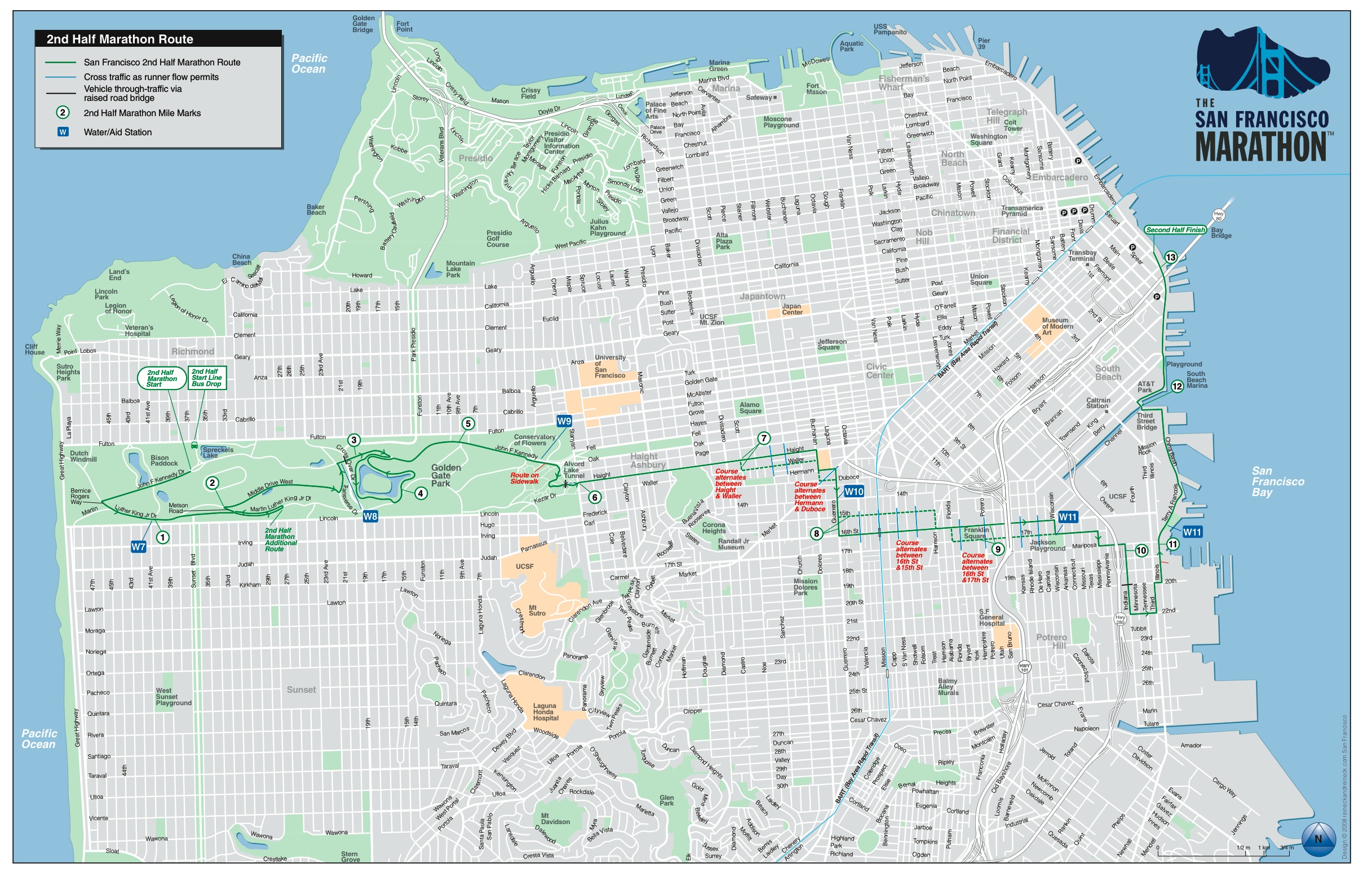
I'm honing in on the last week of training before I run the SF Half Marathon on July 26th. As I'm gearing up for the race, an article on Technology Review that talked about the improvements that have been made in race timing over the past 20 years caught my eye. Races now use lightweight RFID bands that activate when you hit the start-line (which could be up to 10 minutes after the "gun start" if there are a lot of runners), and stop timing when you cross the finish line. In essence, the RFID band has eliminated the issues of a delayed start in a crowded race, and enabled more accurate timing for all runners.
As I was looking around the SF Marathon's website, I noticed there was also an option to have your current position text messaged to a family member or friend during the race. This way, the spectators that matter were more likely to catch a glimpse of you trudging along the course, or keep track of your pace. A pretty cool addition, which got me thinking: how far can we push this technology in the future? Will we be able to to pool other statistics from runners, such as heart rate, respiration rate, etc.? Could family and friends also be notified of our vitals as we run? Will you be able to compare yourself in real-time to other runners?
Just another neat example of self-monitoring making its way into the mainstream...
Science Rock Stars
In a recent post, I talked about the dangers of celebrities promoting pseudoscience. Well, maybe the celebrities have redeemed themselves. GQ featured a pictorial of scientists kicking it with rock stars such as Joe Perry and Sheryl Crow, aimed to raise public awareness of important medical and scientific research.
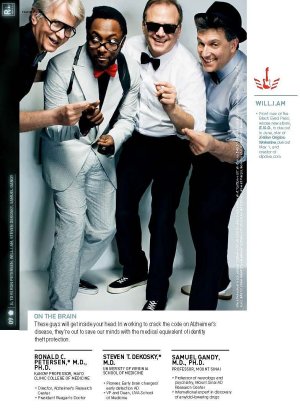
In a recent post, I talked about the dangers of celebrities promoting pseudoscience. Well, maybe the celebrities have redeemed themselves. GQ featured a pictorial of scientists kicking it with rock stars such as Joe Perry and Sheryl Crow, aimed to raise public awareness of important medical and scientific research.
Not since will.i.am of the Black Eyed Peas appeared via hologram (seriously) to talk to CNN's Anderson Cooper during the 2008 Presidential Election, has the rock & roll establishment nerded-out so much. But I applaud this effort to break down the stereotypes of scientists. Despite common misconceptions, we too have a sense of humor and can have fun. Enjoy.
Kick Your Butts
There's no way around it, smoking is bad for you. On top of the negative health effects, smoking also strains our economy. In fact, current estimates suggest $100 billion health care dollars could be saved each year by reducing the number of smokers. So to offer some food for thought for any smokers out there, I wanted to share some of my recent findings. First, I came across some interesting statistics that I wanted to share (from Science Progress):
There's no way around it, smoking is bad for you. On top of the negative health effects, smoking also strains our economy. In fact, current estimates suggest $100 billion health care dollars could be saved each year by reducing the number of smokers. So to offer some food for thought for any smokers out there, I wanted to share some of my recent findings. First, I came across some interesting statistics that I wanted to share (from Science Progress):
19.8 percent of adults in the United States (43.4 million people) were current smokers in 2007.
30 percent of all cancer deaths involve smoking as the primary cause.
443,000 people died prematurely every year as a result of smoking and exposure to tobacco smoke during the period between 2000 and 2004.
During that same period, smoking caused $98 billion in productivity losses each year.
For every person who dies of a smoking-related disease, 20 more people suffer with at least one serious illness from smoking.
20 percent of high school students were smokers in 2007.
3,600 people between the ages of 12 and 17 pick up smoking everyday.
I also found an interesting study that discussed the paradox of nicotine use: Users are thin and have low body fat, but are at an increased risk of cardiovascular disease. So what is it in cigarettes/nicotine that's causing heart problems? A research group at Charles Drew University investigated the effects of giving nicotine to mice. Although the mice lost weight and ate less than the control animals, the nicotine-fed mice developed insulin resistance, which is a precursor to diabetes, and may explain the increased development of heart disease in nicotine users.
Celebrity Nonscience
Two recent blogosphere topics revolve around celebrities handing out scientific advice. I want to be clear in this post, I'm a huge fan of citizen science, where the public invokes the scientific method to run their own series of experiments, and answer scientific questions for themselves. After all, science is not meant to be stuffed away in a lab, only attempted by rubber-gloved scientists in white lab coats. Science needs to live and breathe on our streets, in our schools, and in our backyards. But it bothers me when celebrities start dishing out anecdotal advice as "science-based", when it's simply based on isolated personal experiences. Such advice is not citizen science, but rather a ploy to gain media attention, boost ratings, or sell products and books. I want to highlight two excellent articles I came across -- one that discusses the science that debunked the autism-vaccine controversy, the other on the danger of Oprah's health advice.
Two recent blogosphere topics revolve around celebrities handing out scientific advice. I want to be clear in this post, I'm a huge fan of citizen science, where the public invokes the scientific method to run their own series of experiments, and answer scientific questions for themselves. After all, science is not meant to be stuffed away in a lab, only attempted by rubber-gloved scientists in white lab coats. Science needs to live and breathe on our streets, in our schools, and in our backyards. But it bothers me when celebrities start dishing out anecdotal advice as "science-based", when it's simply based on isolated personal experiences. Such advice is not citizen science, but rather a ploy to gain media attention, boost ratings, or sell products and books. I want to highlight two excellent articles I came across -- one that discusses the science that debunked the autism-vaccine controversy, the other on the danger of Oprah's health advice.

First, let's talk about an excellent review featured in PLoS Biology that exposes the pseudoscience behind the autism-vaccine controversy. To summarize, people began to fear childhood vaccines, such as the measles, mumps, rubella (MMR) vaccine, which contained a certain preservative called thimerosal that contains ethyl mercury (49.6% by weight). This type of mercury sounded similar enough to methyl mercury, a chemical that is present in certain seafood, which causes neurological developmental disorders in children when mothers consume large amounts of mercury-tainted foods during pregnancy. Although a single letter "M" separates ethyl- from methyl-mercury in spelling, they are distinctly different in chemical composition. Before science had weighed-in on whether ethyl-mercury was in fact dangerous, fear-mongers demanded companies to remove the thimerosal from child vaccines. Government health agencies complied, removing the preservative from all vaccines in 2001. Since then, science has determined that the ethyl-mercury in thimerosal does not accumulate in the body in the same was as the methyl-mercury that's in certain seafood, and therefore will not cause the same harmful neurological effects. From the government health agencies' perspective, they were simply making a safe vaccine safer by preemptively removing thimerosal. Instead, certain groups used this motion to falsely conclude that the government must have known thimerosal was dangerous.
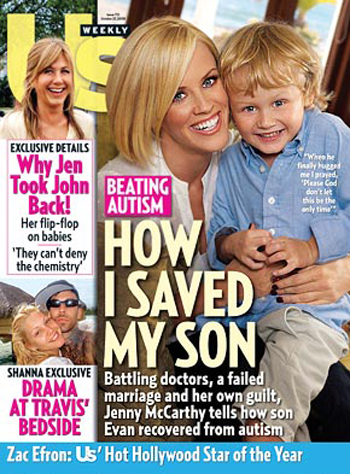
The PLoS review article says that 25% of people actually believe there is a link between autism and vaccines, despite the scientific and medical experts telling us otherwise. That statistic is poised to worsen now that celebrities have jumped on the bandwagon. Jenny McCarthy, has become the poster-child for vaccine-autism controversy as she tells her powerful narrative of her son's struggle with the disease, and his "recovery" through homeopathic treatment. She's appeared extensively on cable news shows where she has made ridiculous statements such as "parents' anecdotal information is science-based information". Sorry, Jenny, but that's simply not true. Another celebrity, Robert F. Kennedy, Jr., published his investigation on what he called a government conspiracy to cover up the links between autism and vaccines in the, ahem...illustrious and rigorous scientific journal, Rolling Stone. As a result of this type of propaganda, infectious diseases once thought to be eliminated from the developed world are reemerging because some parents are not having their children vaccinated.
Next, I want to point out a Newsweek feature that criticized the health advice the infallible Oprah Winfrey is promoting within her media empire. Don't get me wrong, I know Oprah has done a lot of good for many people, but she has to be held accountable for the health advice she hands out, especially when that advice drastically differs from common medical practice. For instance, the Newsweek article mentions an interview Oprah conducted with actress Susanne Somers, who advocates using non-FDA approved, synthesized hormone replacement products aimed at post-menopausal women to reverse the process of aging. Common medical practice suggests that hormone replacement therapy be used in small doses, for a short period of time, to relieve the symptoms of menopause ONLY in very extreme cases. Hormone therapy can increase a woman's chance of developing cardiovascular disease (heart attack or stroke) and cancer. During the show, Oprah had medical experts on-site, but since they were in the audience, and had to raise their hands to interject in the dialog. When a physician expressed concerns over Susanne Somers' promotion of hormone supplements, Oprah came to Somers' defense. Apparently, Oprah takes the word of an actress over physicians in the audience.
The best advice I ever received in graduate school was, "Don't believe everything you read". This pearl of wisdom was directed at scientific literature, as one of the most powerful skills a scientist learns is the ability to distinguish between good studies and not-so-good studies. I suggest a revised mantra for the times -- "(Please, Please, Please) Don't believe everything celebrities say". Check out the links to the full articles I covered here. You'd be severely short-changed if you only relied on my 5-cent summaries.