Pregnancy: Epigenetic and Developmental Links
There were two posts at ScienceDaily today that discussed the consequences of mothers' choices during pregnancy on the future health of their children. The first stated that the children of mothers that smoked cigarettes during pregnancy were more likely to smoke in the future, and would find it harder to quit if they tried. The second discussed the link between obese pregnant mothers and children who developed asthma. Presumably, obesity causes a pro-inflammatory response, which may predispose the fetus to cytokines that cause respiratory inflammation that leads to the development of asthma in later life. These posts have me thinking about just how much a mother's life affects a fetus during pregnancy at the epigentic and developmental levels. In my preliminary search, I've found a couple other interesting stories. One article discussed how maternal feeding affects the biological clock of the fetus. Another report talked about how maternal exposure to bisphenol A (BPA) changes fetal gene expression.

There were two posts at ScienceDaily today that discussed the consequences of mothers' choices during pregnancy on the future health of their children. The first stated that the children of mothers that smoked cigarettes during pregnancy were more likely to smoke in the future, and would find it harder to quit if they tried. The second discussed the link between obese pregnant mothers and children who developed asthma. Presumably, obesity causes a pro-inflammatory response, which may predispose the fetus to cytokines that cause respiratory inflammation that leads to the development of asthma in later life. These posts have me thinking about just how much a mother's life affects a fetus during pregnancy at the epigentic and developmental levels. In my preliminary search, I've found a couple other interesting stories. One article discussed how maternal feeding affects the biological clock of the fetus. Another report talked about how maternal exposure to bisphenol A (BPA) changes fetal gene expression.
Does anyone have any interesting links on this topic to share?
Viva la Vitamin?
I think many of us assume that if experts say that Vitamin C can boost the immune system, then grabbing a 500mg bottle at your local health nutrition store must be a good idea. I know I've been guilty of this mindset. But it turns out that if you exercise, taking antioxidant vitamins might not be in your best interest. There was a good summary by Derek Lowe at 'In The Pipeline' about a new PNAS paper that argues against popping vitamins while engaged in an exercise routine. The study found that the experimental group that took a combination of Vitamin C and Vitamin E actually lost some of the inherent benefits of exercise, such as changes in insulin sensitivity and formation of natural antioxidants. My only criticism of the study is that Vitamin C is capable of regenerating Vitamin E, so I wonder whether this phenomenon will carry through for all supplemental antioxidants, or if it's limited to the particular vitamins used in this study.

I think many of us assume that if experts say that Vitamin C can boost the immune system, then grabbing a 500mg bottle at your local health nutrition store must be a good idea. I know I've been guilty of this mindset. But it turns out that if you exercise, taking antioxidant vitamins might not be in your best interest. There was a good summary by Derek Lowe at 'In The Pipeline' about a new PNAS paper that argues against popping vitamins while engaged in an exercise routine. The study found that the experimental group that took a combination of Vitamin C and Vitamin E actually lost some of the inherent benefits of exercise, such as changes in insulin sensitivity and formation of natural antioxidants. My only criticism of the study is that Vitamin C is capable of regenerating Vitamin E, so I wonder whether this phenomenon will carry through for all supplemental antioxidants, or if it's limited to the particular vitamins used in this study.
I see a recurring theme in the articles that pique my interest these days, and I can't help but wonder, yet again, if this is another example of the differences of nutrients that exist in nature, and those made in a lab? Should we be getting our vitamins from foods instead of supplemental pills?
Much Ado About Sugar
Since the 1980's, American soft drinks have been sweetened with high fructose corn syrup (HFCS), and it's rapidly becoming the sweetener of choice in most processed foods. Critics are quick to point a finger at this enigmatic sugar as the root of all evil, claiming its empty calories are contributing to the obesity epidemic, and the numerous chemical processes needed to make it are simply "unnatural". These accusations didn't sit well with "King Corn", and The Corn Refiners Association fired back with a series of TV commercials stating that HFCS was in fact natural, and completely safe in moderation. Government officials have been talking out of both sides of their mouths on the issue, first allowing HFCS to be called natural, then recently proposing it be taxed, thereby equating it to other unhealthy items, such as cigarettes. With all this conflicting information, what should the public think? Should we avoid HFCS at all costs? How does HFCS compare to other sugar sweeteners?

Since the 1980's, American soft drinks have been sweetened with high fructose corn syrup (HFCS), and it's rapidly becoming the sweetener of choice in most processed foods. Critics are quick to point a finger at this enigmatic sugar as the root of all evil, claiming its empty calories are contributing to the obesity epidemic, and the numerous chemical processes needed to make it are simply "unnatural". These accusations didn't sit well with "King Corn", and The Corn Refiners Association fired back with a series of TV commercials stating that HFCS was in fact natural, and completely safe in moderation. Government officials have been talking out of both sides of their mouths on the issue, first allowing HFCS to be called natural, then recently proposing it be taxed, thereby equating it to other unhealthy items, such as cigarettes. With all this conflicting information, what should the public think? Should we avoid HFCS at all costs? How does HFCS compare to other sugar sweeteners?
Let's start with the science. I recently came across two blog posts (links below), which centered on a study in the Journal of Clinical Investigation that compared the health effects of consuming different dietary sugars -- one experimental group's sugar of choice was glucose, the other group's was fructose. The study boosted the subject's sugar consumption to 25% of their total daily calories by adding fructose or glucose to unsweetened Kool-Aid. The results showed that both groups put on weight, which is not surprising given the sheer volume of sugar consumed. However, the group with the fructose-based diet had higher visceral fat, triglycerides, plasma LDL and oxidized-LDL levels, plasma glucose level, as well as signs of increased insulin resistance, compared to those in the glucose group, all of which are signs of deteriorating health.
There were some shortcomings of the study, which were pointed out nicely in the blog posts: 1.) it was a small study (n=32), 2.) its only participants were obese people (i.e. will the results hold true for normal weight people?), 3.) subjects consumed much more sugar than the average American (mean=15.8% of total calories), and 4.) fructose is more than 2x sweeter than glucose, so in theory, you'd need less fructose calories to obtain the same level of sweetness. Despite the study's limitations, similar results have been shown in primates, which further substantiate the main finding -- fructose-based sweeteners cause secondary health problems. So what do these results mean to us? First, it seems the sweetener used in this study was either 100% glucose or fructose. We typically don't use such pure sugars, as we primarily satisfy our sweet tooth with either table sugar or the high fructose corn syrup that's hidden in the ingredient list of processed foods. What exactly is the difference between these two sugars, and how does using them affect our health? HFCS is a 55/45 mixture of fructose and glucose, respectively. The Journal of Clinical Investigation study claimed that HFCS may be just as bad for you as pure fructose, as the results of a short-term experiment showed comparable negative health effects between subjects that consumed either of these sugars. Table sugar (sucrose), on the other hand, is a 50/50 mixture of glucose and fructose, which is surprisingly similar in composition to HFCS. The primate study I cited earlier reported that diets high in both HFCS and sucrose increased triglyceride levels. So it seems possible that added fructose, regardless of the source or relative concentration, may be detrimental to our health. So if fructose causes a barrage of negative health effects, does that mean eating an apple is bad for you? After all, fructose is the main sugar in fruits. Michael Pollan address this question best in his book "In Defense of Food" (which I just finished reading, and I hope to get a review posted here soon). Pollan states that, opposed to the fructose in the Kool-Aid given to the study participants, the fructose in an apple is not an isolated monosaccharide -- it exists in a complex micro-environment where it is surrounded by lots of fiber, which prevent the fructose from causing a sugar spike, and allow it to be metabolized slowly. Simply put: with food, context is everything. Mother Nature made fruits sweet for a reason -- they are good for us, and contain vital nutrients. But perhaps fructose was never meant to be isolated in a lab and poured into soft drinks, as the results I've discussed show that processed fructose is rapidly metabolized, and leads to negative health.
While more stringent scientific studies need to be conducted to investigate the effects of HFCS on a diverse population, I think it's safe to say that regardless of the source, the 39 grams of sugar in the average soft drink isn't helping the obesity problem in the United States.
Sources: Some Sugars Worse Than Others? The Bittersweet Fructose/Glucose Debate
The Last Swine Flu Outbreak
Just saw the news that the US Public Health Service has declared a public health emergency over outbreaks of swine flu in New York, California, and other states. Might be a good time to post a story I wrote for WIRED a few years ago about modeling pandemics, and various strategies devised at Los Alamos National Labs to contain such outbreaks. The story begins with the story of the last major outbreak of swine flu in the U.S. - the 1976 non-epidemic out of Fort Dix, New Jersey. Though the anticipated pandemic never happened, the threat did prompt President Ford to declare an unprecedented nationwide immunization program.

Just saw the news that the US Public Health Service has declared a public health emergency over outbreaks of swine flu in New York, California, and other states. Might be a good time to post a story I wrote for WIRED a few years ago about modeling pandemics, and various strategies devised at Los Alamos National Labs to contain such outbreaks. The story begins with the story of the last major outbreak of swine flu in the U.S. - the 1976 non-epidemic out of Fort Dix, New Jersey. Though the anticipated pandemic never happened, the threat did prompt President Ford to declare an unprecedented nationwide immunization program.
The story contains both some lessons and some models for today's outbreak. Here's hoping it's contained, and that Mexico can wage a successful campaign against the outbreak raging inside its borders.
Interfacing Personal Data Collection with Electronic Medical Records
A few weeks ago, I posted a summary of a few gadgets that tracked personal metrics (steps taken, sleep quality, etc.). I highlighted these particular devices because they took some of the hassle out of self-tracking by automating the process of collecting data and storing it in a personal database on the device's website.

A few weeks ago, I posted a summary of a few gadgets that tracked personal metrics (steps taken, sleep quality, etc.). I highlighted these particular devices because they took some of the hassle out of self-tracking by automating the process of collecting data and storing it in a personal database on the device's website.
Following up on that post, I read an article at Technology Review today that talked about personal data monitors that interface directly with Microsoft's electronic medical record system, Health Vault. Now, when you step on a scale or take your blood pressure (with compatible devices), your personal metrics will not only streamline to a single site, but will also associate with your health record, which will make this information easier to share and discuss with your physician.
The article says that interfacing personal health metrics with electroinc medical records is a step in the right direction, but it stil requires the user to physically "do" something (i.e. step on a scale, or take a blood pressure measurement). However, soon it may become easier for us to monitor our personal metrics, as a quote from the story says that in the future, "...Band-Aid-like sensors on the skin might monitor blood pressure or heart rate continuously".
National DNA Day 2009
My first exposure to cells, DNA, and genetics was in the 4th grade. Our first assignment was to create a cell model, complete with organelles, a nucleus, and DNA, out of clay and candy. My gray-colored clay cytoplasm was laden with jellybean mitochondria, a licorice nucleus, and Tic Tacs to represent chromosomes. It was a modest simplification of the true wonders of our cells and genetic structure, but it was the highlight of the lesson. Although not at all to proper scale, and biologically unsustainable due to missing structures like M&M golgi bodies and a gummy worm endoplasmic reticulum (which ended up in my stomach instead of in the clay), the lesson brought biology to life for me.
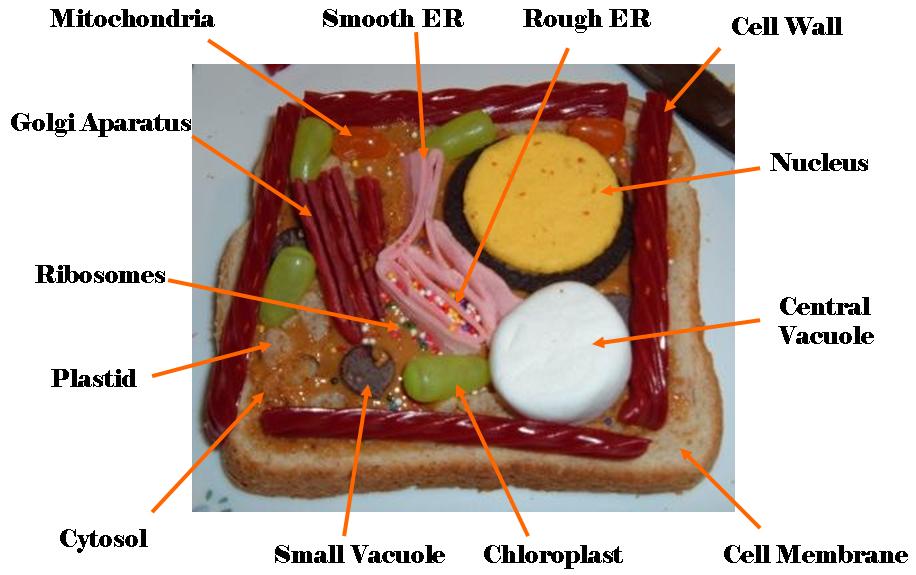
My first exposure to cells, DNA, and genetics was in the 4th grade. Our first assignment was to create a cell model, complete with organelles, a nucleus, and DNA, out of clay and candy. My gray-colored clay cytoplasm was laden with jellybean mitochondria, a licorice nucleus, and Tic Tacs to represent chromosomes. It was a modest simplification of the true wonders of our cells and genetic structure, but it was the highlight of the lesson. Although not at all to proper scale, and biologically unsustainable due to missing structures like M&M golgi bodies and a gummy worm endoplasmic reticulum (which ended up in my stomach instead of in the clay), the lesson brought biology to life for me.
So I was thrilled to hear the National Society of Genetic Counselors (NSGC) is participating in National DNA Day 2009 by reaching out to students across the country. Genetic counselors will talk to the kids about DNA, genetic testing, and the genetic counseling profession. Apparently our education system has come a long way on DNA education from its candy-model roots. With the advent of personal genomics upon us, it is crucial for the rising generation to understand what genetic screening is all about -- and who better to present this information than NSGC members, who are the interface between genomic technology and its users.
A press release describing all of the efforts of the NSGC on DNA Day 2009 can be read here
All Fat is not Created Equal
A new Nature news story discusses the little known fact that there are two different types of adipose (fat) tissue: white and brown. White fat tissue stores excess calories that are not used for energy as lipids, and typically accumulates around the hips and thighs of the girls, and around the belly of the guys. Simply put, it's the excess inches we try to get rid of through diet and exercise. Brown adipose tissue (BAT), on the other hand, typically accumulates around the collarbone, shoulder blade, and neck area. Originally thought to only be present in human newborns and animals, BAT is unique in that it burns excess fat calories, as opposed to storing them, to keep the body warm.

A new Nature news story discusses the little known fact that there are two different types of adipose (fat) tissue: white and brown. White fat tissue stores excess calories that are not used for energy as lipids, and typically accumulates around the hips and thighs of the girls, and around the belly of the guys. Simply put, it's the excess inches we try to get rid of through diet and exercise. Brown adipose tissue (BAT), on the other hand, typically accumulates around the collarbone, shoulder blade, and neck area. Originally thought to only be present in human newborns and animals, BAT is unique in that it burns excess fat calories, as opposed to storing them, to keep the body warm.
However, in recent studies published in The New England Journal of Medicine, researchers found metabolically active BAT in an unexpected place -- on human adult volunteers. The studies used Positron Emission Tomography (PET), which measures where consumed radio-labeled glucose is metabolized in the body. Subjects were scanned either at room temperature, or in a cold room (17-19 deg Celsius), while their feet were repeatedly immersed in cold water (7-9 deg Celsius). It turns out that with the cold room and ice-cold foot bath, there was a significant increase in the metabolic activity of the fat tissue around the collarbone and shoulder blades, compared to scans taken at room temperature. Cold temperatures activate the sympathetic nervous system, and epinephrine (adrenaline) is released, which causes the body to warm itself. These results show that in colder temperatures, calories may not be stored on your waist or hips, but rather, metabolized by the brown adipose tissue to keep you warm.
Despite their findings, it's not suggested you take your lunch and head for the nearest walk-in freezer. But the key finding is that BAT metabolism is triggered by adrenaline, the same hormone responsible for the "fight or flight" response. Therefore, these results open the possibility that new drugs that activate the sympathetic nervous system to release adrenaline may be a viable treatment for obesity.
Change the "Dollar Menu" to the "Ten Dollar Menu"?
As obesity takes its toll on our nation's health and health care system, I've often wondered what part the ubiquitous fast-food "Dollar Menu" plays on the problem. Would a higher price or tax on high-fat, high-sugar junk food deter people from eating it? Brain Bloggers offer a well-argued perspective on the matter that I recommend you check out.

As obesity takes its toll on our nation's health and health care system, I've often wondered what part the ubiquitous fast-food "Dollar Menu" plays on the problem. Would a higher price or tax on high-fat, high-sugar junk food deter people from eating it? Brain Bloggers offer a well-argued perspective on the matter that I recommend you check out.
Waiting for Reform
When I discuss the ideas of creating a proactive patient with others, I often sense a bit of hesitation and skepticism in their voices. "Is our current health care system ready for a patient participating in their own care", they'll ask. The optimist in me wants to say "of course", but realistically, I know there are many challenges we'll face in trying to change the status quo.

When I discuss the ideas of creating a proactive patient with others, I often sense a bit of hesitation and skepticism in their voices. "Is our current health care system ready for a patient participating in their own care", they'll ask. The optimist in me wants to say "of course", but realistically, I know there are many challenges we'll face in trying to change the status quo.
Despite the bumps in the road ahead, I simply don't believe we can wait for the health care infrastructure to come up to speed. I was recently reminded of this when reading The New York Times feature on the fact that health care and insurance companies are not accepting new cancer therapies. Rather than traditional intravenous (i.v.) drugs, some chemotherapeutic medicines are now available in pill format. The patient no longer has to visit the clinic to receive treatment -- they can just pop the pills at home. Although it seems like a logical step in medical treatment, the pill therapy has not been well received by health providers and insurance companies. Doctors may be reluctant to prescribe the cancer pills for a number of reasons, such as wondering whether patients will remember to take the pills on their own, or loss of revenue, since doctors can charge for the clinic time required to administer the i.v. drugs, but cannot do so for pills taken at home. But most damaging to the pill therapy is the fact that insurance companies are not reimbursing this treatment at the same level as i.v. treatment, which means high out-of-pocket expenses for patients.
While this case describes a very drastic change in the health care status quo, it's essence highlights the common lag between progress and acceptance. Change is occurring, the health care infrastructure is resisting, and, most importantly, patients are losing. That's why I think it's important to address the issues involved in making the next generation patient now, before they create such a large divide between the traditionalists and the progressives. Incremental changes are easier to digest than large ones. Perhaps if just a small number of us start arming ourselves with genetic information, personal biometrics, and an increased knowledge of medical and scientific information, we can help smooth the road ahead.
In utero preventive medicine
News of 23andMe launching an online community for expecting mothers, and a few recent journal articles talking about the dangers of environmental polychlorinated biphenyls (PCBs) on both prenatal and neonatal brain development, have got me thinking about the future of in utero preventive medicine. Lesson: I guess it's never too early to begin implementing a Decision Tree...

News of 23andMe launching an online community for expecting mothers, and a few recent journal articles talking about the dangers of environmental polychlorinated biphenyls (PCBs) on both prenatal and neonatal brain development, have got me thinking about the future of in utero preventive medicine. Lesson: I guess it's never too early to begin implementing a Decision Tree...