Living By Numbers: A Patch That Tracks Your Health
One thing I've learned covering technology over the years is to be wary of cool hardware. I've seen amazing devices and toys and gadgets and gizmos and scarce few of them ever catch-on. Which is to say, if it's hard to make a good gadget, it's even harder to make it succeed as something people actually want to buy and learn how to use and integrate into their lives. And when something does work - when something is good enough to get people to change the way they live and adjust their routine and introduce new habits - then there's something about that product that deserves study.

One thing I've learned covering technology over the years is to be wary of cool hardware. I've seen amazing devices and toys and gadgets and gizmos and scarce few of them ever catch-on. Which is to say, if it's hard to make a good gadget, it's even harder to make it succeed as something people actually want to buy and learn how to use and integrate into their lives. And when something does work - when something is good enough to get people to change the way they live and adjust their routine and introduce new habits - then there's something about that product that deserves study.
This is a lesson I tried to keep in mind the other day when I met some folks from Proteus Biomedical, a Silicon Valley company that's come up with a nifty system for self-monitoring via a data-gathering patch - aka a smart band aid - and smart pills. Called the Raisin system, Proteus's approach is right in line with the stuff I've been researching for The Decision Tree, and the company's CEO and scientists are fully versed in the promise and challenges of personalized medicine. The Raisin system comes down to hardware, so it's far from a sure thing - but it's innovative and intriguing enough to merit some consideration.
The Raisin system has two parts. First there's the patch, a big band-aid thing that you slap on your chest. It collects physiologic data like heart rate, temperature, respiration rate and so forth (Since it's not invasive it doesn't collect chemical information like blood glucose or such). That information is sent, via Bluetooth, to your cell phone, where it is routed online. Voila, constant tracking and aggregation. The patch alone is cool - it's not the only smart band-aid out there, and these things have been around for at least a decade. But it seems like a simple enough variation on the theme and sounds well designed. The second part of the Raisin system adds to the gee-whiz factor: it's a tiny sensor chip that is lodged inside a pill. The sensor can detect when the pill is consumed, and that information is sent to the patch and from there to the Web.
The result is a system that can measure basic biometrics but also can track compliance - whether a patient is taking their medication. It could be used to assess when a patient is at some danger from missing a dose (if their pulse or breathing rate start racing, say) or conversely if there's an overdosage.
Now this is where I could get a bit skeptical - it's a hardware tool for compliance that comes with compliance issues all its own. Will people really tolerate a big bandaid on their belly 24/7? Will they remember to use a new one after a shower, or when they go on a trip? These are the sort of issues that may thwart the adoption of the system. But put those issues to the side for the moment. What's cool about the Proteus Raisin system is that it's capturing data that otherwise is lost, and then giving that data back to the individual (and their loved ones or doctor), in order to improve their health. It's a nifty way to take these ideas about the power of data, the stuff I prattle on here about, and turn them into specific tools.
Of course, I'm hardly the first to hear the Proteus spiel. MIT's Technology Review, Business Week, MedGadget, Wired.com, lots of places have covered the Raisin system. So I'll offer two points that I find intriguing about it that haven't been mentioned elsewhere:
1) Yeah, Proteus' approach may have a compliance issue. But it's an issue with smaller event space, so to speak, than the larger compliance issue of taking your medication three times every day. And if they can get people to wear the patch, they're going to learn a lot more than whether they take their meds - They'll get all sorts of bio-data that's useful beyond any one drug prescription. So the system seems close to pulling off the difficult task of allowing for the passive collection of data and then enabling active engagement with that data. That is, they've turned self-monitoring into a simple, functional tool.
2) The Proteus approach is a relatively open one. The Raisin system is, obviously, proprietary, as is the data-collection hardware (whatever's in that patch). But the Raisin execs said they don't want to control control the interface for using that data, or how a patient uses their data - meaning the info collected via the Raisin system can be ported and integrated into other companies' systems and products. I'm sure there may be restrictions to this, but taking them at their word, this means the folks at Proteus understand that data is only truly useful when it's free to move - and when it's our data, we should be able to move it whereever suits us. So if they say that a Google Health or a Patientslikeme.com could integrate the Raisin data into their own interface, along the lines of blogs adding a YouTube file. This is very reassuring, and would address some of what bothers me about the walls at Nike+ or Virgin HealthMiles - the data you stick there stays there, and it's that much less useful.
So will Proteus' Raisin system catch on? It's a real question, because not only does it face the usual issues of a new piece of hardware in the marketplace but it also faces the additional burden of compliance from patients. But it certainly is the sort of thing that could make living by numbers more easy for people to get into. Even more, the effect of something like a Raisin may be greater than just improving how many pills we take. In an environment when some individuals are feeling overwhelmed by the number of pills they need to take in a certain order or at certain times, a feeling that can impede compliance and make us less likely to make the right choices, a Raisin system can actually give people the data that brings with it a sense of control, of management that transcends the daily schedule and manifests as a control over our broader conditions. It's the sort of thing that make people feel like they're treating their disease, rather than just holding it off. It's the sort of thing that lets us start seeing our health as a series of decisions that we're in charge of. And that's something that deserves to catch on.
Why Behavior Change is Better Medicine than Drugs
One of the preconceptions that people have about "personalized medicine" is that it comes down to pharmaceuticals - that we'll use our personal information, most likely genetic information, to identify specific drugs that will work best for us. The problem with this conception, though, is that it still assumes a reactive medical establishment, where we're stuck treating chronic disease, rather than taking decisive action earlier to ward off disease altogether. (Another problem is the lack of such drugs in the pharma pipeline, but that's another issue.)
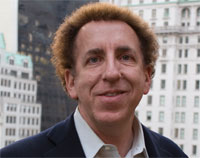
One of the preconceptions that people have about "personalized medicine" is that it comes down to pharmaceuticals - that we'll use our personal information, most likely genetic information, to identify specific drugs that will work best for us. The problem with this conception, though, is that it still assumes a reactive medical establishment, where we're stuck treating chronic disease, rather than taking decisive action earlier to ward off disease altogether. (Another problem is the lack of such drugs in the pharma pipeline, but that's another issue.)
The real promise of personalized medicine, to my mind, is that we'll be making earlier decisions based on our specific and granular understanding of what our risks are, and using that information to choose better behaviors, well before we may need drugs. (This is why I prefer the term "predictive medicine," but that's just semantics.)
I got some evidence for this line of thinking yesterday in a conversation with Dr. Dean Ornish, the well-known diet guru who is also a respected scientist (and it should be said, fan of Wired, where I work). A few months ago, Dr. Ornish and colleagues published some intriguing data in the Lancet, based on a study that assessed how behavior change affects telomeres, the ends of our chromosomes that control how long we live. Ornish's work showed that drastically improved behavior change - better diets and more exercise - actually increased telomerase, the enzyme that lengthens telomeres. In other words, better behavior probably lengthen our lives. Ornish also recently published a complementary study in the Proceedings of the National Academy of Sciences that found behavior change may even change gene expression. The study showed that genes associated with cancer, heart disease and inflammation were downregulated or "turned off" whereas protective genes were upregulated or "turned on." Though it was a small study, of 30 men, the evidence is impressive, insofar that it demonstrates that behavior change works not just on a metabolic level, but on a genomic one as well.
Now obviously behavior change of the sort that these studies uses is intensive and thorough, on a scale that few people are likely to get close to. For the PNAS study, the men were assigned a "low-fat, whole-foods, plant-based nutrition; stress management techniques; moderate exercise; and participation in a psychosocial group support." As Dr. Ornish acknowledges, these are expensive services to provide. But what may be more important is the demonstration of principles - collaborative groups, and feedback loops that make people conscious of what they're eating and how much they're exercising. These are sound principles that anyone can adopt.
Dr. Ornish has an op-ed in today's Wall Street Journal, co-authored by alternative medicine gurus Deepak Chopra and Andrew Weil, that elaborates on these principles and places them in a broader context of preventive medicine. Alternative medicine gets a lot of gruff from the traditional medical establishment, and I confess I myself am more comfortable with data and metrics than the "feel good" mechanisms that Chopra prostilitizes. But what's emerging, as Dr. Ornish's work and the op-ed shows, is that the two aren't mutually exclusive. There is sound data behind the preventive medicine that goes by the name of "wellness," there's a method to it that's more effective than pharmacology. That doesn't make behavior change any easier. But at least we know it's the better medicine.
Thanks for the shout out, Lance
Despite the holiday doldrums, there's been lots of great responses out there to my Truth About Cancer story in Wired. But my favorite is this amusing tidbit: Friends know I'm an avid cyclist - inspired, in fact, by my father in law, a ferocious cyclist and athlete who died of bladder cancer in 2001. The closest I've come to fandom in recent years is rooting on Lance Armstrong through his seven Tour De France wins (very eager to see what happens this year with his comeback).

Despite the holiday doldrums, there's been lots of great responses out there to my Truth About Cancer story in Wired. But my favorite is this amusing tidbit: Friends know I'm an avid cyclist - inspired, in fact, by my father in law, a ferocious cyclist and athlete who died of bladder cancer in 2001. The closest I've come to fandom in recent years is rooting on Lance Armstrong through his seven Tour De France wins (very eager to see what happens this year with his comeback).
So imagine my glee when I was forwarded this Tweet from Lance's Twitter feed:
Sitting by the pool reading the new WIRED. Cover story called "The Truth About Cancer". Good read and right in many ways.about 6 hours ago from TwitterBerry
In addition to his cycling prowess and his famous history with cancer, Lance has turned his Lance Armstrong Foundation into one of the most recognized and most formidable nonprofits out there working on cancer. I'm glad to see that he agrees that early detection and smarter screening are integral to the fight.
The Promise & Paradox of Early Detection
A quick note that my latest story for Wired, on the emerging science of early detection of cancer, is now on stands (and online).
The story focuses on the Canary Foundation, a Silicon Valley-based nonprofit that's funding an innovative approach to cancer research: strictly focusing on developing two-step tests that will spot various cancers in their earliest stages, when the odds of successful treatment are highest.

A quick note that my latest story for Wired, on the emerging science of early detection of cancer, is now on stands (and online).
The story focuses on the Canary Foundation, a Silicon Valley-based nonprofit that's funding an innovative approach to cancer research: strictly focusing on developing two-step tests that will spot various cancers in their earliest stages, when the odds of successful treatment are highest.
My effort here was to explore how early detection - which sounds obvious on its face; of course we should find cancer early - in practice creates a series of riddles and/or paradoxes. For instance, when you're looking for something floating in the bloodstream (a molecular signal of early cancer), how can you be sure it's present in high enough volumes early enough to be worthwhile as a test? Or: What if a test is great at spotting cancers that, paradoxically, may not actually be lethal, and thus may not merit immediate treatment? What I find admirable about the Canary Foundation approach is that they don't look at finding a protein or a DNA signal as the be-all/end-all of a valid test - it's just the beginning the a statistical parsing that may or may not result in something clinically useful.
If it's not obvious, the connection to the decision tree thesis is this: Finding disease early, when treatment choices are various and have more promise of success, is a far better position to be in than waiting for symptoms and late-stage treatments. My hunch is we're going to be moving towards more and more screening tests for more and more conditions. The challenge will be striking a balance between good tests that and the expense of too much screening and too many false signals.
Oh, and a shout-out to Wired's design department, helmed by Scott Dadich, which always does an ace job turning some rather sober writing on my part into something alluring and cover-worthy.
How We Measure Health
One of the key components of making the right health decisions is - and ever will be - having the right information from which to decide. In today's world of blood tests and screening exams and Gleason scores, this seems pedestrian. But the fact is that medicine only began quantifying health in the early 1900s, with the notion of high blood pressure, and it was well into the 1950s before individuals became aware of their numbers. I read recently that FDR's blood pressure was high for nearly a decade, hovering as high as 200/150- astronomical, by today's standards -for years, and was locked at 260/150 near his death from, yup, heart disease. But with no treatment available, the number was simply a warning that, maybe, he should cut back on smoking a bit.

One of the key components of making the right health decisions is - and ever will be - having the right information from which to decide. In today's world of blood tests and screening exams and Gleason scores, this seems pedestrian. But the fact is that medicine only began quantifying health in the early 1900s, with the notion of high blood pressure, and it was well into the 1950s before individuals became aware of their numbers. I read recently that FDR's blood pressure was high for nearly a decade, hovering as high as 200/150- astronomical, by today's standards -for years, and was locked at 260/150 near his death from, yup, heart disease. But with no treatment available, the number was simply a warning that, maybe, he should cut back on smoking a bit.
In the 60 years since, the number of commonly tracked health metrics has soared, so much so that, these days, you can track them on your iPhone

The ability to track (and utility of tracking) these metrics seems to me increasingly important. While my colleagues over the Quantified Self have been sniffing around the greater landscape of personal metrics (UPDATE: and Alexandra Carmichael recently posted the 40 things about herself that she tracks daily), from productivity apps to those photo-a-day guys, I've been especially interested in those metrics that we can use to provide feedback and can perhaps manipulate in the hopes of improving our health (whether it's running faster or weighing less). Feedback, to me, is key. Where FDR could only watch his numbers climb, now to have our numbers is to have the opportunity to adjust our numbers.
Which brings me to the point of this post: Aan effort to begin cataloging all the health metrics ordinary citizens might have available to track. The list - which needs your help - begins after the jump:
I've divided these into three categories (for now). Basic stats, Biometrics (in the sense of physiological statistics), and Relative Stats (variable inputs & subjective data). There may be better categories, and there are certainly stats I'm missing, so please help me add more
Basic stats:
- Height
- Weight
- Sex
- Age
Biometrics:
- Blood pressure
- Cholesterol count (LDL and HDL)
- Menstrual cycle (time)
- Blood glucose level
- liver enzyme level
- Gleason score (prostate test)
- (lots more blood tests out there)
Relative Stats:
- calorie intake
- fat intake
- transfat intake
- protein intake
- carb intake
- exercise (time, weight, reps)
- mood
Daschle: Let's Crowdsource Healthcare Reform
A couple observations on the official announcement today that Obama will nominate Tom Daschle as secretary of Health and Human Services as well as oversee an office of healthcare reform. This officially designates healthcare as a leading issue for the administration - but not in the 100 days sense. Daschle talked about a process of several years, which may be simply a way to carve out some breathing room but also to avoid the impression that they'll go in there guns-a-blazin' like Clinton did in 1992, only to come up empty (is that one metaphor or two?). Also, very intriguing to hear Daschle talk about soliciting input from all Americans, via house meetings (Daschle promises to sit in on a few) and suggestions posted on Change.gov. “Over the next few weeks, we will be coordinating thousands of healthcare discussions in homes all across the country through our Web site, change.gov, where ordinary Americans can share their ideas about what's broken and how to fix it,” Daschle said.
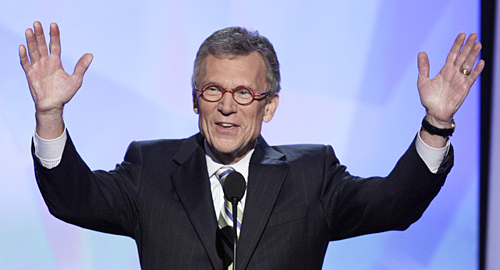
A couple observations on the official announcement today that Obama will nominate Tom Daschle as secretary of Health and Human Services as well as oversee an office of healthcare reform. This officially designates healthcare as a leading issue for the administration - but not in the 100 days sense. Daschle talked about a process of several years, which may be simply a way to carve out some breathing room but also to avoid the impression that they'll go in there guns-a-blazin' like Clinton did in 1992, only to come up empty (is that one metaphor or two?). Also, very intriguing to hear Daschle talk about soliciting input from all Americans, via house meetings (Daschle promises to sit in on a few) and suggestions posted on Change.gov. “Over the next few weeks, we will be coordinating thousands of healthcare discussions in homes all across the country through our Web site, change.gov, where ordinary Americans can share their ideas about what's broken and how to fix it,” Daschle said.
Obama calls this part of an "open and transparent process," but another word for it - if he's serious - is opensource healthcare reform. In this case, I think that's a great idea. One, it gets buy-in (or creates the impression of buy-in) from the populace, getting them on board with what has been demonized as freightening change or "socialized medicine." And two, it acknowledges that healthcare is an infinitely complicated beast, and demands to be considered from every perspective. Crowdsourcing has been used a bit by some government agencies - most inventively by NASA and its "clickworkers" effort a few years back - but never far as I know to hash out real policy reform. It'll be interesting to see what, if anything, the power of the crowd comes up with that 50 years of expert (though failed) wonkery hasn't thought of.
One side note: I think this is also the first official suggestion of what the Obama administration might do with Change.gov post-inauguration, as well.
introducing ... The Decision Tree
This blog has been silent - okay, dead - for the past three months. You'll get no apologies here, but I do have an explanation: I've begun writing a book, to be called The Decision Tree.
In many respects, this book will be an extension of many of the preoccupations I've pursued here at Epidemix. Those handful of you who follow my magazine writing will no doubt recognize the theme as well. The premise is that we are at a new phase of health and medical care, where more decisions are being made by individuals on their own behalf, rather than by physicians, and that, furthermore, these decisions are being informed by new tools based on statistics, data, and predictions. This is a good thing - it will let us, the general public, live better, happier, and even longer lives. But it will require us to be stewards of our health in ways we may not be prepared for. We will act on the basis of risk factors and predictive scores, rather than on conventional wisdom and doctors recommendations. We will act in collaboration with others, drawing on collective experience with health and disease, rather than in the isolation and ignorance that can come with "privacy" concerns. And we will act early, well before symptoms appear, opting to tap the science of genomics and proteomics in order to mitigate our risks down the road.
This blog has been silent - okay, dead - for the past three months. You'll get no apologies here, but I do have an explanation: I've begun writing a book, to be called The Decision Tree.
In many respects, this book will be an extension of many of the preoccupations I've pursued here at Epidemix. Those handful of you who follow my magazine writing will no doubt recognize the theme as well. The premise is that we are at a new phase of health and medical care, where more decisions are being made by individuals on their own behalf, rather than by physicians, and that, furthermore, these decisions are being informed by new tools based on statistics, data, and predictions. This is a good thing - it will let us, the general public, live better, happier, and even longer lives. But it will require us to be stewards of our health in ways we may not be prepared for. We will act on the basis of risk factors and predictive scores, rather than on conventional wisdom and doctors recommendations. We will act in collaboration with others, drawing on collective experience with health and disease, rather than in the isolation and ignorance that can come with "privacy" concerns. And we will act early, well before symptoms appear, opting to tap the science of genomics and proteomics in order to mitigate our risks down the road.
Together, these tools will create a new opportunity and a new responsibility for people to act - to make health decisions well before they become patients. This can be characterized as a decision tree, a series of informed choices we will make to minimize uncertainty and optimize our outcomes. Indeed, we will use decision trees to navigate most of our health decisions, sometimes in overt ways - new decision support tools will both inform us and guide us, and they'll be steeped in statistics, predicition, and the power of collective experience.
These ideas have been discussed often here at Epidemix, but with this post they now become the central concerns of this blog. And thus, I've decided to retitle the blog - in a few days, I'll be transferring this blog to TheDecisionTree.com (though the other address will still bounce). There are obvious marketing/branding reasons for this - where this blog has lived a fairly secluded life as a public notepad, I hope that TheDecisionTree.com will take on a more prominent role in the broader discussion of predictive medicine and healthcare. And I think my blogging will improve (in verve if not quantity) with some clear focus, allowing the blog to become a more authoritative resource on these topics. But I also sincerely want to solicit the advice, opinions, and criticism of readers as I hash out the ideas that will emerge in the book. If the book celebrates the central values of early action and openness, I better be practicing those same values here (another central value, statistics, will be somewhat harder to loop in. But there are certain metrics -unique visitors, etc - that I certainly hope to see increase).
I'll post more details on the book itself in coming weeks. But suffice it to say that I'm very excited about it - I think it will lend a clarity of purpose and vision that's been missing from most discussions about personal genomics and predicitive/personalized medicine, and will point towards some compelling virtues and trade-offs that will come with the prospect of better healthcare. So please settle in for what I think will be a nifty exploration of some compelling ideas.
Why It's So Hard to Quit Smoking
Let's assume that pretty much every smoker in the U.S. knows cigarettes are bad for them. And let's that assume that "bad for them" is understood as likely to kill them. Someday. But in the meantime, before that"someday" happens, millions of people continue to smoke, until for more than 400,000 Americans, someday becomes today. And that's just death - according to the CDC, about nine million Americans suffer some 13 million smoking-attributable health problems every year. No wonder the U.S. spends more than $75 billion in smoking-related health costs every year.
Let's assume that pretty much every smoker in the U.S. knows cigarettes are bad for them. And let's that assume that "bad for them" is understood as likely to kill them. Someday. But in the meantime, before that"someday" happens, millions of people continue to smoke, until for more than 400,000 Americans, someday becomes today. And that's just death - according to the CDC, about nine million Americans suffer some 13 million smoking-attributable health problems every year. No wonder the U.S. spends more than $75 billion in smoking-related health costs every year.
What we're left with, then, is a very clear picture that people continue to smoke even when they know it's bad for them - yet more evidence that, as I've said before, behavior change is hard.But what's especially surprising is when the harms caused by smoking hurts not just the smoker, but others. I'm not talking second-hand smoke. I'm talking real dangers. Dangers not evident someday, but very much in the here and now.
Today, the CDC offers some staggering evidence on that score: Two reports in the MMWR that demonstrate just how hard it is to quit smoking - even when it's somebody else's health at risk, not your own.
First, there's a study on smoking prevalence among women of child bearing age in the U.S. Aside from the familiar yet unsettling statistic that 22.4% of women 18 to 44 years old are smokers, there's this unnerving stat: among smokers aged 18 to 24 years old, a staggering 68% have tried to quit. But only 26% have been successful. Ouch. That means that even when these potential mothers are trying to stop smoking, they have only a 1/3 chance of success. That success rate gets better among older groups - by ages 36 to 44, about 46% of smokers manage to quit. But even so, that's a horrible success rate. And one can presume that the flip side - the majority of smokers can't quit - means that there are a whole lot of women smoking right through their pregnancy. When, one imagines, they're most motivated to quit, because it isn't their health on the line, it's their unborn child's as well.
If that's bad, this is worse: another study in the MMWR carries the gripping title, "Fatal Fires Associated with Smoking During Long-Term Oxygen Therapy." Yes, that's right: a study about how many oxygen tanks exploded because the people using them couldn't keep from lighting up. The study looks at fires in four states (Maine, Massachussetts, New Hampshire and Oklahoma), and finds some 38 fires from 2000 to 2007 can be attributed to exploding oxygen tanks due to cigarettes. Remarkably, only 37 people died in these fires, and only three of those weren't the smokers themselves. Nonetheless: can there be a more clear sign that cigarette addiction drives people to act in self-destructive ways - not only by continuing to smoke, but to do so at the risk of blowing themselves up? (I should note, these fires are a mere subset of the number of fatal fires caused by cigarettes - which are the leading cause of residential fire deaths in the U.S., according to the CDC report).
Here's why I keep on about behavior change, and why smoking is a central illustration of the challenges involved: There's a lot of talk out there these days, including by me and here on this blog, about preventive medicine. The line goes that once we learn our risks - genetic, environmental, and otherwise - we'll be able to take action and change our lives, adjusting our behaviors to ward off those risks. It sounds good, and I continue to believe that preventive medicine will bring us to a more efficient, more effective, and more responsive healthcare system. We'll live smarter and longer and better.
But if we want to know the stakes involved in expecting millions of Americans to start living better, smokers offer perhaps the clearest example of how challenging this will be. After all, no behavior has better evidence for negative repercussions, no group is better informed about the health risks involved in their behavior, and no activity carries such a clear upside for the public health. 400,000 people die every year when they needn't have, if they'd just acted differently. And yet: the evidence shows that it isn't easy. People will still misbehave when they know it's against their own interests. People will misbehave when they're putting their children's health at risk, too.
And - holy cow - people will misbehave even when they're going to blow themselves up.
Photo courtesy Larry Taylor.
The Gene Collector: George Church & the Personal Genome Project
My latest story in Wired, a profile of geneticist George Church, is in the August issue, now on the stands (and online here).
In some regard, it's a follow-up to my previous story on personal genomics. But it is really my effort to shine the light on one person who's doing so much to propell us towards the future of genomics. Church is frighteningly intelligent, yet notably calm and kind (and generous with his time, explaining for me, for instance, the principles of synthetic biology again and again until some of it got through).
My latest story in Wired, a profile of geneticist George Church, is in the August issue, now on the stands (and online here).
In some regard, it's a follow-up to my previous story on personal genomics. But it is really my effort to shine the light on one person who's doing so much to propell us towards the future of genomics. Church is frighteningly intelligent, yet notably calm and kind (and generous with his time, explaining for me, for instance, the principles of synthetic biology again and again until some of it got through).
It was great fun talking with him and reporting the story. My hope is it helps people understand the ambitions and potential of personal genomics, if pursued on a massive scientific scale.
How the Taliban is Bringing Back Polio
On a NYTimes blog, a harrowing tale of the conflict between religious extremism and the WHO in Pakistan. Fearful that the polio vaccine causes impotence (it doesn't), local clerics in northern Pakistan waged a campaign against the vaccine, and Unicef called off its immunization effort. The result: The first case of polio in the area since 2003. Some fascinating overlaps with the war against the Taliban in the area. Worth a read - and a longer exploration by someone.
On a NYTimes blog, a harrowing tale of the conflict between religious extremism and the WHO in Pakistan. Fearful that the polio vaccine causes impotence (it doesn't), local clerics in northern Pakistan waged a campaign against the vaccine, and Unicef called off its immunization effort. The result: The first case of polio in the area since 2003. Some fascinating overlaps with the war against the Taliban in the area. Worth a read - and a longer exploration by someone.