Fact-checking medical claims
In 2007/08, the work of Nicholas Christakis and James Fowler revealed that human behaviors, and even states of mind, tracked through social networks much like infectious disease.
Or put another way, both obesity and happiness worm their way into connected communities just like the latest internet meme, the best Charlie Sheen rumors, or the workplace gossip about Johnny falling down piss-drunk at the company’s holiday party.
In 2007/08, the work of Nicholas Christakis and James Fowler revealed that human behaviors, and even states of mind, tracked through social networks much like infectious disease.
Or put another way, both obesity and happiness worm their way into connected communities just like the latest internet meme, the best Charlie Sheen rumors, or the workplace gossip about Johnny falling down piss-drunk at the company’s holiday party.
But according to a new research study, incorrect medical facts may be no different, galloping from person to person, even within the confines of the revered peer-reviewed scientific literature. And by looking at how studies cite facts about the incubation periods of certain viruses, a new study in PLoS ONE has found that quite often, data assumed to be medical fact isn’t based on evidence at all.
How many glasses of water are we supposed to drink each day? Eight – everyone knows it’s eight. But according to researchers from the schools of Public Health and Medicine at Johns Hopkins University, this has never been proven true. In fact, they argue there’s not one single piece of data that supports this claim.
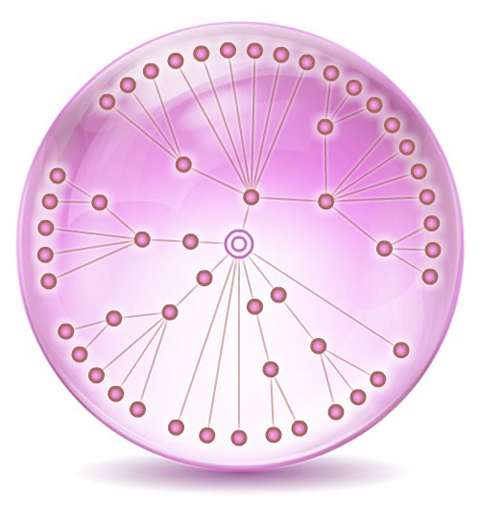
Digging a little deeper, the research team dove into scientific papers looking for places where researchers quoted the incubation period of different viruses, from influenza to measles. Every time a claim was made, they traced the network of citations back to the original data source (and provided a cool visualization of the path, to boot). For example, many studies will set the stage for their own research by saying that it’s commonly known that the incubation period for influenza is 1-4 days, and next to that statement, they’ll put a small reference in parenthesis, which signals where they obtained that information.
The problem is, many articles cited another study, that cited another study, which in turn cited yet another – you get the picture. It’s like a really bad version of the “telephone game" played by kids. And 50% of the time, the researchers found no original source of incubation period data when they started backtracking. Scary stuff.
By factoring in review articles, which are supposed to be a comprehensive analysis of a field of research, the team found that 65% of viral incubation data never gets cited again after its first publication. 65%! Granted, review articles have to factor in the quality of the research done in individual experiments. So is that much crappy research being done, or is the majority of science in this particular arena simply falling into the growing chasm of “dark data”?
I’ve been chewing on this article for a while, waiting for the right time to write something about it. Today, a tweet by Nieman Lab caught my attention, and spurred me into action.
The tweet pointed to a post on Doc Searls’ blog asking media outlets to do a better job linking to original sources (I, like Searls, get super-frustrated with the NYT, when they either don’t link to a source, or you click on the underlined blue text thinking you’ll be enlightened by profound insight, only to find you’ve been swept away to some vaguely-related post authored by another NYT staffer).
Time to add scientists to your list of offenders, Doc.
Photo via Flickr / Dan Zen
Citation: Reich NG, Perl TM, Cummings DAT, Lessler J, 2011 Visualizing Clinical Evidence: Citation Networks for the Incubation Periods of Respiratory Viral Infections. PLoS ONE 6(4): e19496. doi:10.1371/journal.pone.0019496
** Update, 18 May 2011: The statistics cited in this post (50% of original data not traced back to source, 65% of studies never cited again) apply, in this case, to viral incubation data only. The authors didn't extrapolate these findings to other medical claims. I updated the statements above to make this explicitly clear. -bjm
Brian Mossop is currently the Community Editor at Wired, where he works across the brand, both magazine and website, to build and maintain strong social communities. Brian received a BS in Electrical Engineering from Lafayette College, and a PhD in Biomedical Engineering from Duke University in 2006. His postdoctoral work was in neuroscience at UCSF and Genentech.
Brian has written about science for Wired, Scientific American, Slate, Scientific American MIND, and elsewhere. He primarily cover topics on neuroscience, development, behavior change, and health.
Contact Brian at brian.mossop@gmail.com, on Twitter (@bmossop), or visit his personal website.
Mastering Mania: The Link Between Creativity and Mental Illness in the Brain
A New York Times story grabbed my attention today, “Just Manic Enough: Seeking Perfect Entrepreneurs”. Telling the story of 21-year-old Seth Priebatsch – a guy who successfully secured a $750,000 investment from venture capitalists for what some may argue is just a crazy idea – the article showed how this certain young entrepreneur seemed to tread a very fine line between being a workaholic, self-confident entrepreneur, and full-blown clinical manic. With hypomania, people experience similar mood and behavior swings as those with clinical mania. But although the two conditions share common symptoms like increased vigor, persistently elevated moods, and reduced desire or need for sleep, hypomania does not seem to prevent people from experiencing a fully functioning life. In fact, some have argued the symptoms may be conducive to success. The NYT article highlighted several well-known, professionally-accomplished hypomaniacs, such as George S. Patton and Theodore Roosevelt, both of whom seemed able to keep the condition in check – arguably, just enough – to rise to the top of their respective professional circles.

A New York Times story grabbed my attention today, “Just Manic Enough: Seeking Perfect Entrepreneurs”. Telling the story of 21-year-old Seth Priebatsch – a guy who successfully secured a $750,000 investment from venture capitalists for what some may argue is just a crazy idea – the article showed how this certain young entrepreneur seemed to tread a very fine line between being a workaholic, self-confident entrepreneur, and full-blown clinical manic. With hypomania, people experience similar mood and behavior swings as those with clinical mania. But although the two conditions share common symptoms like increased vigor, persistently elevated moods, and reduced desire or need for sleep, hypomania does not seem to prevent people from experiencing a fully functioning life. In fact, some have argued the symptoms may be conducive to success. The NYT article highlighted several well-known, professionally-accomplished hypomaniacs, such as George S. Patton and Theodore Roosevelt, both of whom seemed able to keep the condition in check – arguably, just enough – to rise to the top of their respective professional circles.
Over the past few weeks, I’ve grown increasingly interested in the connection between creativity and mental illness. There have been numerous books and articles written on the ideas that famous writers and artists, many of whom ended up taking their own lives, suffered from bipolar disorder or other clinical mood problems.
So I started looking into the scientific literature around this idea, to see if researchers have been able to pinpoint specific brain circuits that prove the existence of this alleged gray-zone between creativity and mental illness. In other words: could the same brain structures fuel a raging fire of creativity in an individual on moment, yet cause disastrous mental illness at a later point in time?
[NOTE: In a very cursory search, I found an enormous amount of information. I plan to share the most interesting findings I come across over the next few weeks as short blog posts.]
A study published in May 2010 in the journal, PLoS ONE, by Örjan de Manzano and colleagues from the Stockholm Brain Institute at Karolinska Institutet, Stockholm, Sweden tapped into the creative mind of healthy individuals using both positron-emission tomography (PET) brain imaging and standard psychological tests.
The Berliner Intelligenz Struktur Test is a divergent thinking exercised often used to gauge creative prowess. The researchers would ask the participants to list every possible use for a brick that comes to mind within a given amount of time, or create as many novel drawings they can using just a few line segments. The ability to rattle off variations of an initial idea taps into the associative mind, and is not necessarily correlated to general knowledge or intelligence, at least in the standard definitions of the terms.
Örjan de Manzano and colleagues hypothesized that creativity may in fact be linked to defunct dopamine signaling in certain areas of the brain. After all, from previous studies, they already knew that people carrying the A1 allele of the dopamine-receptor gene DRD2 TAQ IA exhibited increased creativity, as seen by higher scores on the divergent thinking test, with absolutely no changes in generalized intelligence.
Using PET imaging, researchers can determine the functionality of D2 receptors by introducing a radiotracer that binds to these receptors. By measuring the D2 receptor binding potential of these tracers – a measure of how long the radiotracer stays attached to the receptor substrate – researchers can measure the strength of dopamine signaling in different areas of the brain.
In a very small group of healthy volunteers (this is probably the biggest criticism of the study), Örjan de Manzano and colleagues found that the level of D2 receptor binding potentials in the thalamus were negatively correlated (r = -0.64) to their score in the divergent thinking test, which means the more creative the people were (as determined by the divergent thinking test), the LESS dopamine activity they had in the thalamus. No such correlations were found in other areas of the brain, such as the striatum or the frontal cortex.
The thalamus is often considered a gate to the cortex, the area where much of the higher order processing of stimuli takes place. The cortex is the region where we essentially discriminate one sound from another, or determine a circle is different than a square. The authors think that less dopamine signaling in the thalamus leads to a less regulated flow of information to the cortex. In other words, the creative brain isn't filtering out information at very low levels – it’s actually letting more and more through. Increased chatter in the cortex may transiently put the brain in a different state, allowing the mind to rapidly switch between thoughts and ideas.
As the authors point out, the sudden burst of info would more than likely come at a cost to the cortex, however, and may materialize as a decrease in selective attention. A study has corroborated this theory, showing that people who score higher in divergent thinking tasks may be more creative, but are also more easily distracted.
Although preliminary, this study suggests a powerful link between creativity and reduced dopamine signaling in the thalamus. If true, creativity might be due to more information making it past the thalamic gatekeeper, and into the cortex, where different neural circuits – ones that may not usually talk to each other – begin to harmonize in creative synchrony.
This paper offers no direct evidence that a less active thalamic filter correlates to mental illness. Still, the authors speculate how a more information moving through the thalamus might also be related to so-called positive symptoms in psychiatric disease. Though most of the discussion on mental illness relies on hand-waving explanations, the authors still clearly articulate a few good points. Hallucinations and delusions are thought to be due to an overactive cortex in one way or another, so the possible link is at the very least worth considering – perhaps in my next post.
photo via Flickr /yago1.com

de Manzano, ?., Cervenka, S., Karabanov, A., Farde, L., & Ullén, F. (2010). Thinking Outside a Less Intact Box: Thalamic Dopamine D2 Receptor Densities Are Negatively Related to Psychometric Creativity in Healthy Individuals PLoS ONE, 5 (5) DOI: 10.1371/journal.pone.0010670