Online, Highly-Linked Networks Really Do Change Behaviors
Although the results may not be that surprising to readers of this blog, I was intrigued by Wired Science's coverage of a new paper in the journal Science that showed that highly interconnected soical networks are much more powerful that randomly connected groups for changing behaviors.
Although the results may not be that surprising to readers of this blog, I was intrigued by Wired Science's coverage of a new paper in the journal Science that showed that highly interconnected soical networks are much more powerful that randomly connected groups for changing behaviors.
Unlike infectious diseases and news, behavior change spreads faster through online networks that have many close connections instead of many distant ties. Redundancy is key, as people are more likely to engage in a behavior if they see many others doing it.
In other words, when starting a new, healthy behavior (say exercise), knowing ten random people who run may help motivate you. But if that group of ten people is a close-knit group of running buddies who all know each other, the chances of sticking to your new routine go up. Way up.
photo via Flickr/vestman
Behavior Change, On the Road
It’s my first trip to London, or to the UK for that matter. The city itself has the distinctive, quintessential, old-world charm I pictured, yet it’s blanketed with the expected conveniences of modern technology. My office for the past two days has rotated between a few wifi-enabled local pubs, a scene that may in fact be the clearest example of the integration of the old and the new. Some simple trip stats thus far: Days in London: two. Number of times I’ve ordered fish and chips as a meal: two. Number of close calls I’ve had with speeding cars after looking in the wrong direction while crossing the street: four (This is in spite of the clearly marked ‘Look Left’ or ‘Look Right’ warnings pasted in the crosswalk).

It’s my first trip to London, or to the UK for that matter. The city itself has the distinctive, quintessential, old-world charm I pictured, yet it’s blanketed with the expected conveniences of modern technology. My office for the past two days has rotated between a few wifi-enabled local pubs, a scene that may in fact be the clearest example of the integration of the old and the new. Some simple trip stats thus far: Days in London: two. Number of times I’ve ordered fish and chips as a meal: two. Number of close calls I’ve had with speeding cars after looking in the wrong direction while crossing the street: four (This is in spite of the clearly marked ‘Look Left’ or ‘Look Right’ warnings pasted in the crosswalk).
Being born on the east coast, and having frequent access to the hustle and bustle of New York City, the past four years in laid-back San Francisco has redefined my view of city life. But London makes San Francisco look like a city of hardasses. Here, everything is toned down a bit. Even the beer is easygoing. An IPA in California will knock your socks off with its alcohol content (some of them upward of 7% ethanol), and bowl you over with the bitter taste of hops. But here the IPA is actually an enjoyable experience for most, smooth and mellow.
If I ever did a stint living overseas, I think I’ve found my city.
Indeed, the past two weeks have been insane as we took PLoS Blogs from a pipe dream to a fully-functional website. Lack of sleep, not eating properly, and the constant adrenaline rush that follows building the next great science communication platform definitely took its toll on me. I still got a fair amount of running in these past days, but nothing fast, nothing crazy.
Following the stress of the past few days and the abundance of fish and chips in my belly, going for a run was the number one priority for today. I opted, however, for a much safer treadmill jaunt rather than navigating the city streets and traffic patterns that flat out confuse me. I only intended to get a quick 3- or 4-miler in, because I had a great deal of work to do, and was still trying to slay the seemingly insurmountable jet-lag beast.
But today’s run was easier than expected, if not easier than usual. Instead of an obligatory run where I count off the seconds until I’m done, I had to force myself to stop after nearly 6-miles. Why was it so much easier today? More than likely, the difference was all in my head. Was I still caught in the adrenaline rush that preceded the launch of PLoS Blogs? Was I still riding the dopamine wave from our success and the congratulatory emails? Perhaps. But the difference may have also, at least in part, been due to the equipment itself.
When I run, there’s no doubt a small dopamine burst somewhere in my head every time I hit another mile marker. There’s just something about whole numbers that resonates with my reward system. With the mileage tracked in kilometers, those dopamine bursts occurred more frequently, which may help explain the increased enjoyment of today’s run.
Another feature of this treadmill was its display, which charted your progress around an outdoor course or circumnavigating a 400m track. For me, watching a small red dot hop along this computer-generated scenery certainly tops either blankly staring at a wall or even watching TV while using a treadmill.
Both Thomas and I have written before on this blog about how technology can change behaviors. And admittedly, I’ve often blindly thought that change means initiating new behaviors. But today, technology also seemed to help me keep those behaviors going longer than usual, an equally important aspect to healthy living.
While my scientific “study” (playing it fast and loose with the word “study”, I know) is riddled with holes and confounders, it’s compelling to think about the consequences of small rewards in behavior change.
When I get back to reality, I’ll see if I can dig up some scientific studies on this idea. But for now, I’m off to a pub with some friends.
Cheers.
photo via Flickr/anirudh koul
PLoS Blogs Launches
Greetings from London, where I’ll be situated for the next few days. I’m here to attend the Science Online London 2010 conference on Friday and Saturday, representing PLoS. I’m happy to announce that yesterday we announced the launch of a grand new endeavor, a scientific blog network, PLoS Blogs. As the resident community manager (and avid in-house proponent of PLoS getting into the blogging scene), I’ve been tapped to manage this group as well.

Greetings from London, where I’ll be situated for the next few days. I’m here to attend the Science Online London 2010 conference on Friday and Saturday, representing PLoS. I’m happy to announce that yesterday we announced the launch of a grand new endeavor, a scientific blog network, PLoS Blogs. As the resident community manager (and avid in-house proponent of PLoS getting into the blogging scene), I’ve been tapped to manage this group as well.
We have a fantastic lineup of bloggers, which include a Pulitzer Prize winner (Deborah Blum), the former editor-in-chief of Scientific American (John Rennie), science journalist powerhouses (Steve Silberman, Emily Anthes, and Melinda Wenner Moyer), and top researchers (David Kroll, Travis Saunders & Peter Janiszewski, Greg Downey & Daniel Lende, Misha Angrist, Sarah Kavassalis, Martin Fenner).
You can read my launch post over there in full, where I talk about PLoS’ reason for doing this, our vision, and my thoughts on the future of science blog networks:
There’s been a lot of chatter in the blogosphere that any networks that spawn in the wake of #SbFAIL have to be one flavor or another: If you’re an organization, you’re only going to recruit writers with large, notable brands; on the flip side, if you’re a smaller grass-roots network, you won’t be able to snag those big names in the first place.
We weren’t quite sure how PLoS squared with this logic. We’re not a deep-pocketed corporate organization, but we certainly have a well-respected brand. We embody a certain grass-roots vibe, yet we have strong technical, administrative, and marketing support.
I guess the most important lesson we’ve learned in the past six weeks is that theory goes out the window when you actually set out to build a network. We didn’t want to become another ScienceBlogs, or another Discover Blogs, for that matter. So we finally said screw it and did our own thing. We set out to create our own niche network.
This is an exciting new endeavor for PLoS and the team over there has really busted their butts for the past weeks getting this thing up and running, especially my boss, Sara Wood, and our jack-of-all-trades web engineer, Russ Uman.
Please do check out the site. And send your comments along to me:
brian.mossop[at]gmail[dot]com
bmossop[at]plos[dot]org
Crying as an Evolutionary Advantage
I just finished reading a compelling story at NPR's website, "Teary-Eyed Evolution: Crying Serves a Purpose".
As humans, we are unique in that we shed tears to show emotions. Why don't we just yelp or whimper like other animals?
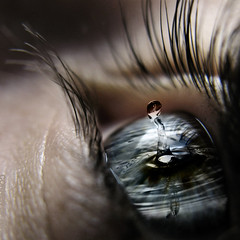
I just finished reading a compelling story at NPR's website, "Teary-Eyed Evolution: Crying Serves a Purpose".
As humans, we are unique in that we shed tears to show emotions. Why don't we just yelp or whimper like other animals?
The story presents an intriguing argument: that the ability to cry may have carried a certain evolutionary advantage within early human communities:
Within these communities, Bering says, tears could be powerful tools. They did more than just signal vulnerability — they were perhaps a way of keeping social and reproductive bonds strong. Maybe good criers were survivors.
"Crying seems to elicit compassion and guilt," Bering says, "and that itself may be an evolved mechanism to save relationships in distress."
It's pretty hard to be pissed off at someone who's crying. So maybe, just maybe, crying provides a means for us to keep those close social bonds in tact. Bonds, which at least in part, make us human.
photo via Flickr/cornerofart
The New Face of Addiction: Prescription Painkillers
The Washington Post reports that nearly 21% of Americans, aged 12 and older, have used prescription medication for non-medical reasons. At the same time, we've seen more than a four-fold increase in the number of prescriptions handed out for opiate painkillers (like Percocet, Vicodin, and Oxytocin). Why are these drugs becoming more popular than illicit street drugs? The Post article cites two reasons. First, these drugs are available. Users will often shop around for doctors who will provide them with extra pills with minimal hassle. Second, there is a common misconception that these pharmaceuticals are less dangerous or addictive than street drugs. But the reality is, they activate the same opioid receptors as heroin.
The Washington Post reports that nearly 21% of Americans, aged 12 and older, have used prescription medication for non-medical reasons. At the same time, we've seen more than a four-fold increase in the number of prescriptions handed out for opiate painkillers (like Percocet, Vicodin, and Oxytocin). Why are these drugs becoming more popular than illicit street drugs? The Post article cites two reasons. First, these drugs are available. Users will often shop around for doctors who will provide them with extra pills with minimal hassle. Second, there is a common misconception that these pharmaceuticals are less dangerous or addictive than street drugs. But the reality is, they activate the same opioid receptors as heroin.
Simply cracking down the amount of drugs handed out isn't the solution. Neither is making sweeping modifications that make it harder to get these drugs. Many chronic pain patients rely on these medications to function, and their quality of life might suffer because of the irresponsible use of others.
It seems patient education is currently the best system for preventing addiction and abuse of prescription painkillers. Every time another prescription for these medications is torn from a doctor's tablet, a serious conversation about the proper use and risks of abuse should follow.
Wave of Rhabdomyolysis in Oregon High School Football Players
Rhabdomyolysis is caused by severe injury to muscle cells. The condition is serious, and can lead to kidney failure if not properly treated. Basically, muscle cells break down and release byproducts in the bloodstream. One particular protein, myoglobin, is especially hard on the kidneys. Rhabdomyolysis usually occurs when your average couch-potato decides to head to the gym for the first time in months, pushes his-or herself to the brink of exhaustion, and doesn't drink enough water. So today's NYT story that said twenty-four athletes from McMinnville High School in Oregon were diagnosed at their local hospital with rhabdomyolysis caught my attention. The players began complaining about symptoms -- which typically include sore/swollen muscles and dark urine -- a few days after an intense preseason workout.
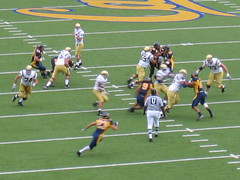
Rhabdomyolysis is caused by severe injury to muscle cells. The condition is serious, and can lead to kidney failure if not properly treated. Basically, muscle cells break down and release byproducts in the bloodstream. One particular protein, myoglobin, is especially hard on the kidneys. Rhabdomyolysis usually occurs when your average couch-potato decides to head to the gym for the first time in months, pushes his-or herself to the brink of exhaustion, and doesn't drink enough water. So today's NYT story that said twenty-four athletes from McMinnville High School in Oregon were diagnosed at their local hospital with rhabdomyolysis caught my attention. The players began complaining about symptoms -- which typically include sore/swollen muscles and dark urine -- a few days after an intense preseason workout.
Was the summer layoff to blame? Did the players report to camp out of shape, force their way through an intense workout, and not stay properly hydrated? Maybe. But doctors aren't ruling out the possibility that supplements may have been involved. Some of the student-athletes reported they regularly consumed a protein shake, but weren't sure exactly what was in it.
Creatine is a popular supplement among high school and college power athletes. The supplement works by increasing water retention in the body, which makes the muscle fibers larger. But if the water pressure inside the cells is high enough, it's possible the increased stress could potentially break down the cells themselves. In fact, there have been a few case studies showing that taking creatine supplements, especially in high doses, may trigger rhabdomyolysis.
Granted, there are a number of compounding factors at play. And we don't even know if creatine was in the protein shake or not. But it certainly makes you wonder when you see a wave of rhabdomyolysis occur in otherwise healthy young athletes.
So I'll keep my eyes peeled for the results of the lab reports, which should surface in the coming days.
photo via Flickr @rdesai
Genome Sequencing of Sitting Bull
As a follow up to the post I did yesterday ("King Tut's Parents Were What?"), I thought I'd talk more about genetic testing on dead people. Science News ran a story today saying that Sitting Bull, of Little Big Horn upset/General Custer demise fame, will be "the first ancient, non-frozen Native American to have his genome sequenced."
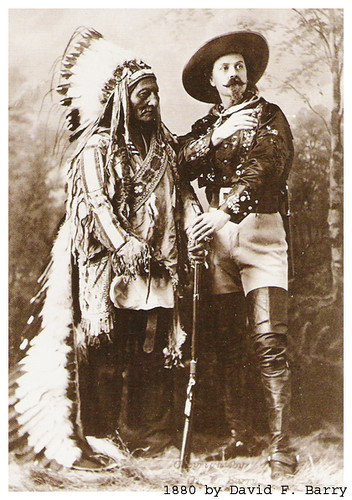
As a follow up to the post I did yesterday ("King Tut's Parents Were What?"), I thought I'd talk more about genetic testing on dead people. Science News ran a story today saying that Sitting Bull, of Little Big Horn upset/General Custer demise fame, will be "the first ancient, non-frozen Native American to have his genome sequenced."
The genomic sequencing of Sitting Bull is part of a larger initiative by Cristina Valdiosera and Eske Willerslev from the University of Copenhagen to use new techniques to sequence genes from ancient samples. The ambitious project will help piece together how populations of people arrived where they are today.
photo via Flickr @cooling
King Tut's Parents Were What?
Some 3000 years after his death, King Tut is finally airing his dirty laundry. New DNA evidence suggests that Tutankhamen's parents were actually brother and sister.
The fascinating tale of the experiments that proved this, along with a detailed family tree of Tut can be found on National Geographic's website.
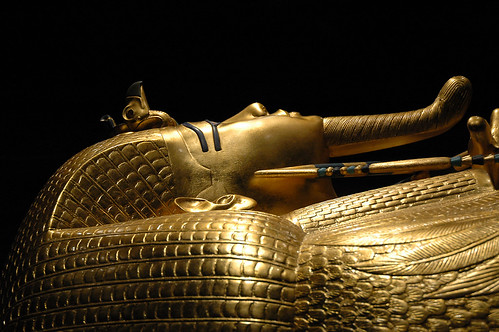
Some 3000 years after his death, King Tut is finally airing his dirty laundry. New DNA evidence suggests that Tutankhamen's parents were actually brother and sister.
The fascinating tale of the experiments that proved this, along with a detailed family tree of Tut can be found on National Geographic's website.
But equally interesting to the main article is a sidebar by my friend and colleague, David Dobbs, where he takes on a rather uneasy subject by discussing the fact that royal incest, well, was often considered normal.
Throughout time, royals married within their family for financial, political, and even spiritual reasons:
If the royals knew of these potential downsides, they chose to ignore them. According to Stanford University classics professor Walter Scheidel, one reason is that "incest sets them apart." Royal incest occurs mainly in societies where rulers have tremendous power and no peers, except the gods. Since gods marry each other, so should royals.
At the time, these people more than likely didn't know the drastic health consequences that arise in offspring from closely-matched genetic mates. So rather than judge King Tut, maybe we should simply recognize him for what he was: the product of an elite, socially-isolated royal environment. After all, as Dobbs points out, traces of royal incest can be found throughout time and across the globe, from Inca Peru to the Hawaiian Island kingdoms.
photo: via Flickr @malavoda
Stress Hormones and Competition
I just finished my first post for Wired Playbook, which talks about the hormonal changes that occur in the body during competition. Whether the hormones levels increase or decrease may give some insight into the psychological readiness of a contender.
I just finished my first post for Wired Playbook, which talks about the hormonal changes that occur in the body during competition. Whether the hormones levels increase or decrease may give some insight into the psychological readiness of a contender.
Armed with cotton swabs coated with pulverized Sweet Tarts candy, researchers took saliva samples minutes before two monkeys engaged in a staged competition for a pile of food. When dominant males won, there was a clear increase in the stress hormone right before the competition. In these cases, the dominant male was ready. He had sized up his opponent and knew, no doubt, that he’d prevail.
Conversely, when the dominant male lost, the hormone level decreased before the food game. Although these apes live in very well-defined social societies – and the dominant male had more than likely battled with this opponent before and won – something had psyched him out.
Read the full post here.
My Scientific American Story on the Father-Child Bond
Sorry, but this post is nothing but shameless self-promotion! My first short feature article was published in Scientific American today, which discusses the neurobiology of the father-child bond. Give it a read!
Sorry, but this post is nothing but shameless self-promotion! My first short feature article was published in Scientific American today, which discusses the neurobiology of the father-child bond. Give it a read!
Last May, I took a trip to San Diego for my brother-in-law’s graduation from college, and to meet his 4-month old son, Landon, for the first time. Throughout the weekend, I couldn’t suppress my inner science nerd, and often found myself probing my nephew’s foot reflexes. Pressured from my wife’s disapproving looks and the blank stares I received from her family as I explained why his toes curled this way or that, I dropped the shop-talk in favor of baby-talk.
Click here to read the rest.