How Much Personal Data is Needed to Stay Healthy?
A few months ago, a story ran in Wired Magazine that described a noticeable shift in the scientific method, and attributed the change to our ability to produce and store large amounts of data.Historically, the scientific method was built around a testable theory. But in the 21st century, theories were becoming obsolete; the data simply spoke for itself.
A few months ago, a story ran in Wired Magazine that described a noticeable shift in the scientific method, and attributed the change to our ability to produce and store large amounts of data.Historically, the scientific method was built around a testable theory. But in the 21st century, theories were becoming obsolete; the data simply spoke for itself.
Data from our bodies is no exception -- physiologic data can now be accessed as a real-time data stream thanks to personal health monitors. But does the vast amount of data we get from our bodies make us any healthier? Do we need to collect data 24-hours a day in order to learn something interesting about our health? Is it even feasible to wear these sensors all day, every day?
I am embarking on a new self-tracking experiment to answer these questions (and possibly a few others). For 30 days, I will be using devices such as the Zeo personal sleep coach, the Philips DirectLife activity monitor, the Mio Motiva wristband on-demand heart rate monitor, and the Nike+ sportband. The goal of this study is not to pit one device against another; rather, I want to focus on what the data tells me, and how I can best use it to stay healthy.
I'll get a blog post up here at least once a week, all the while working on a longer story about the journey that will be released at the end of the month.
Stay tuned. It should be a fun ride...
Behavior Change: A Central Topic at Health 2.0
The afternoon of Day 1 of the Health 2.0 Conference was highlighted by the session, "The Patient is In". First up, a video that documented the experiences of a group of people that recently started using patient health tools, such as online health journals that track diet or exercise, support sites for quitting smoking, or home blood test kits.

The afternoon of Day 1 of the Health 2.0 Conference was highlighted by the session, "The Patient is In". First up, a video that documented the experiences of a group of people that recently started using patient health tools, such as online health journals that track diet or exercise, support sites for quitting smoking, or home blood test kits.
Following the video, a few of the participants were joined onstage by technology pioneer Esther Dyson. Some panelists said that while they exercised a bit more and ate somewhat better during the course of the experiment, soon after they returned to their old (bad) habits. Others were completely sold on the idea of self-tracking, and one particular panelist said that his daily running and mile-logging inspired his daughter and her friend to do the same. Likewise, his neighbor, having noticed him trotting around the neighborhood several times a week, started his own walking regiment. In the panelist's words, "People draw energy from supportive environments".
Social contagion, the idea that behavior change can be contagious, has been gaining ground. A few months ago, I experienced the power of social contagion for myself: as many readers know, I'm a long-time runner. But no matter how many miles I logged per week, my wife never really understood why I was out on the road, tormenting myself for hours. It wasn't until she bought a Nike+ sensor, and her boss challenged her to a "See Who Can Run More Miles in a Month" challenge that she became hooked on running. Now I have to spy on her website running log to make sure I still run more miles per week (yes, I'm competitive too).
Some people are inspired to change their behaviors by logging how many calories they're consuming every day. Others are motivated by seeing friends or family stop smoking. And for some, it takes someone else to throw down the gauntlet, and say, "I bet I can kick your butt in a race around the track" for the change to occur.
Esther Dyson concluded the session by saying that we can also drive behavior changes by associating the things we just don't like to do with small "rewards". Personally, she rewarded the monotony of flossing with a 5-minute reprieve from her intense exercise routine. So on days she flossed, instead of swimming for an hour, she could quit after 55 minutes.
Social contagion and little rewards go a long way in keeping people focused and motivated, and I was glad to see these ideas brought up at today's conference.
Automatic Data Tracking with Personal Health Monitors
I started thinking about the usefulness of personal health monitors last year. Heart disease runs rampant through my family, and several of my maternal uncles have had heart attacks, one of them at the age of 35. With my 30th birthday rapidly approaching, I started to think about my own mortality -- my blood pressure and cholesterol were both already well above average. Given my family's history of heart disease, I decided to go talk to my general physician. We decided the best course of action was to treat the problem with diet and exercise modifications. Although I have been physically active my entire life, I realized that I no longer had the metabolism of a teenager, and had to start thinking about what I was eating and how I was exercising before there was a serious impact on my health.And so, I began running again for the first time in a very long while. I knew that as I ran more and more, I would start to just feel "better", but that notion just wouldn't satisfy the science geek inside me, and I needed to put numbers to my improvements. So I started tracking my heart rate (via a standard chest-strap heart rate monitor ). I figured, at the very least, tracking my heart rate (HR) during my run would allow me to understand how it correlated to my exertion level. It would also be interesting to see how my HR changed as I got back into shape. I bought the basic version -- the one that shows your current heart rate, but doesn't store any of the data or calculate statistics like max/min/average HR. I was surprised how consistent my HR was during exercise, and soon began to use this information to gauge the intensity of my runs. For example, some days I would be feeling fine and I would be running at my normal pace, but my HR was running about 3-4% higher than usual. While I'm not sure if that is abnormal, it happens very infrequently, and I used it as a signal that I should slow down and take it easy. While my current understanding of my HR during exercise is far from the interpretation of body metrics talked about here at The Decision Tree, I believe my analysis has me headed in the right direction.
I started thinking about the usefulness of personal health monitors last year. Heart disease runs rampant through my family, and several of my maternal uncles have had heart attacks, one of them at the age of 35. With my 30th birthday rapidly approaching, I started to think about my own mortality -- my blood pressure and cholesterol were both already well above average. Given my family's history of heart disease, I decided to go talk to my general physician. We decided the best course of action was to treat the problem with diet and exercise modifications. Although I have been physically active my entire life, I realized that I no longer had the metabolism of a teenager, and had to start thinking about what I was eating and how I was exercising before there was a serious impact on my health.And so, I began running again for the first time in a very long while. I knew that as I ran more and more, I would start to just feel "better", but that notion just wouldn't satisfy the science geek inside me, and I needed to put numbers to my improvements. So I started tracking my heart rate (via a standard chest-strap heart rate monitor ). I figured, at the very least, tracking my heart rate (HR) during my run would allow me to understand how it correlated to my exertion level. It would also be interesting to see how my HR changed as I got back into shape. I bought the basic version -- the one that shows your current heart rate, but doesn't store any of the data or calculate statistics like max/min/average HR. I was surprised how consistent my HR was during exercise, and soon began to use this information to gauge the intensity of my runs. For example, some days I would be feeling fine and I would be running at my normal pace, but my HR was running about 3-4% higher than usual. While I'm not sure if that is abnormal, it happens very infrequently, and I used it as a signal that I should slow down and take it easy. While my current understanding of my HR during exercise is far from the interpretation of body metrics talked about here at The Decision Tree, I believe my analysis has me headed in the right direction.
After a year of using the HR monitor, I feel I am ready for an upgrade. I want the data collection to be automated. There is a new class of personal health monitors that is intended to not only be used during exercise, but rather, can be worn throughout the day. These devices passively collect data, and require no input from the user. So as you carry on your daily life -- walking to meetings, running to catch the bus or train, moving your friend's sofa up 3 flights of stairs -- these monitors are automatically calculating metrics such as the total calories burned, steps taken, and miles traveled. Combined with online calorie trackers, these devices create a one-stop diet and exercise analysis system. I just wanted to briefly outline 3 devices that are either on the market, or will be this year. I have chosen these products for their flexibility (you can wear them with any clothing, and can even collect information while you sleep).
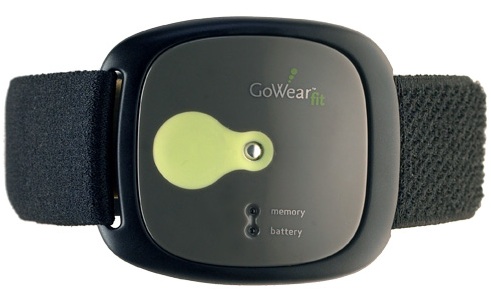
GoWearFit is an armband which has sensors to measure skin temperature and moisture, as well as body acceleration. The company's software uses the data collected from all of the sensors to determine metrics such as calories burned, physical activity duration, steps taken, sleep duration, and sleep efficiency. Periodically, the user must take off the armband and plug it into their computer to upload their data to the GoWearFit website. There is an online subscription required to view your data on your personal activity manager site. So the consumer must pay an upfront cost for the armband (~$150+), and then pay the monthly cost for viewing their data (~$7-13, depending on the service contract).
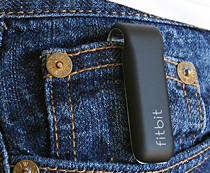
In pre-release sale now, FitBitis a small device that clips on an waist band, shirt, or a wrist strap (provided by the company). It tracks calories burned, steps taken, miles covered, and sleep quality. When the user walks within 20-50ft of the provided basestation, the data is wirelessly transferred, so there is no need to take the device off and connect it to a computer. The basestation then transfers the data to a personal online database. Unlike the GoWearFit system, with FitBit the user pays $99 for the device and that's it -- no monthly subscription fee to view the data. Screen-shots of the online health manager are available on the company's website, and include some nice features, such as a "see what your friends are up to" social networking tool, which could provide some motivation to go to the gym after those long days, when you are struggling to find the reason you started exercising in the first place.
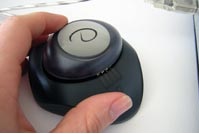
SportBrain has similar features to the FitBit, such as tracking calories, miles, steps, and even has an online personal community where the user can track the activity of family and friends. One nice addition is that it also integrates with certain heart rate monitors. It appears the device is not wireless, so it must be taken off and connected to your computer to upload the data.