The genetic sequence of dinner
The Associated Press reported today that a food distributor in Virginia will start tracking their beef from farm to table by monitoring a DNA tag. The technique has already been used in Europe, but people certainly have high-hopes for its utility in the US:
The Associated Press reported today that a food distributor in Virginia will start tracking their beef from farm to table by monitoring a DNA tag. The technique has already been used in Europe, but people certainly have high-hopes for its utility in the US:
[I]ndustry experts say being able to follow filet mignon, rib eye and other cuts of beef back to the ranch can pay off in multiple ways, including boosting consumer confidence, upping the value of a dinner, and cutting the time needed to track recalled meats.
And the company's market research backed their belief that people are willing to pay a premium for what they consider a "value-add" product:
Tests the company did in some steakhouses it supplies, as well as surveys outside other restaurants, showed consumers were willing to pay $2 or $3 more for the same cut meat if various “pleasers” were added — a higher quality of meat, traceability, as well as how the animals were treated and fed.
Any bets on how long until there's a tableside smartphone app tracing your dinner's journey? Or maybe showing at which restaurants the remaining portions of the cow are located? Then there could be a Facebook group that will bring the remote eaters...ah, forget it.
Brian Mossop is currently the Community Editor at Wired, where he works across the brand, both magazine and website, to build and maintain strong social communities. Brian received a BS in Electrical Engineering from Lafayette College, and a PhD in Biomedical Engineering from Duke University in 2006. His postdoctoral work was in neuroscience at UCSF and Genentech.
Brian has written about science for Wired, Scientific American, Slate, Scientific American MIND, and elsewhere. He primarily cover topics on neuroscience, development, behavior change, and health.
Contact Brian at brian.mossop@gmail.com, on Twitter (@bmossop), or visit his personal website.
Genome Sequencing of Sitting Bull
As a follow up to the post I did yesterday ("King Tut's Parents Were What?"), I thought I'd talk more about genetic testing on dead people. Science News ran a story today saying that Sitting Bull, of Little Big Horn upset/General Custer demise fame, will be "the first ancient, non-frozen Native American to have his genome sequenced."
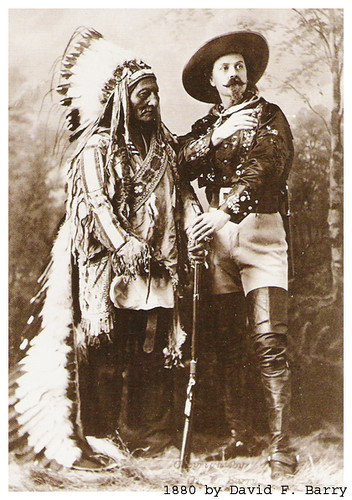
As a follow up to the post I did yesterday ("King Tut's Parents Were What?"), I thought I'd talk more about genetic testing on dead people. Science News ran a story today saying that Sitting Bull, of Little Big Horn upset/General Custer demise fame, will be "the first ancient, non-frozen Native American to have his genome sequenced."
The genomic sequencing of Sitting Bull is part of a larger initiative by Cristina Valdiosera and Eske Willerslev from the University of Copenhagen to use new techniques to sequence genes from ancient samples. The ambitious project will help piece together how populations of people arrived where they are today.
photo via Flickr @cooling
King Tut's Parents Were What?
Some 3000 years after his death, King Tut is finally airing his dirty laundry. New DNA evidence suggests that Tutankhamen's parents were actually brother and sister.
The fascinating tale of the experiments that proved this, along with a detailed family tree of Tut can be found on National Geographic's website.
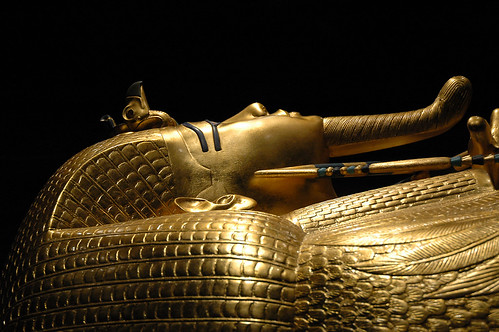
Some 3000 years after his death, King Tut is finally airing his dirty laundry. New DNA evidence suggests that Tutankhamen's parents were actually brother and sister.
The fascinating tale of the experiments that proved this, along with a detailed family tree of Tut can be found on National Geographic's website.
But equally interesting to the main article is a sidebar by my friend and colleague, David Dobbs, where he takes on a rather uneasy subject by discussing the fact that royal incest, well, was often considered normal.
Throughout time, royals married within their family for financial, political, and even spiritual reasons:
If the royals knew of these potential downsides, they chose to ignore them. According to Stanford University classics professor Walter Scheidel, one reason is that "incest sets them apart." Royal incest occurs mainly in societies where rulers have tremendous power and no peers, except the gods. Since gods marry each other, so should royals.
At the time, these people more than likely didn't know the drastic health consequences that arise in offspring from closely-matched genetic mates. So rather than judge King Tut, maybe we should simply recognize him for what he was: the product of an elite, socially-isolated royal environment. After all, as Dobbs points out, traces of royal incest can be found throughout time and across the globe, from Inca Peru to the Hawaiian Island kingdoms.
photo: via Flickr @malavoda